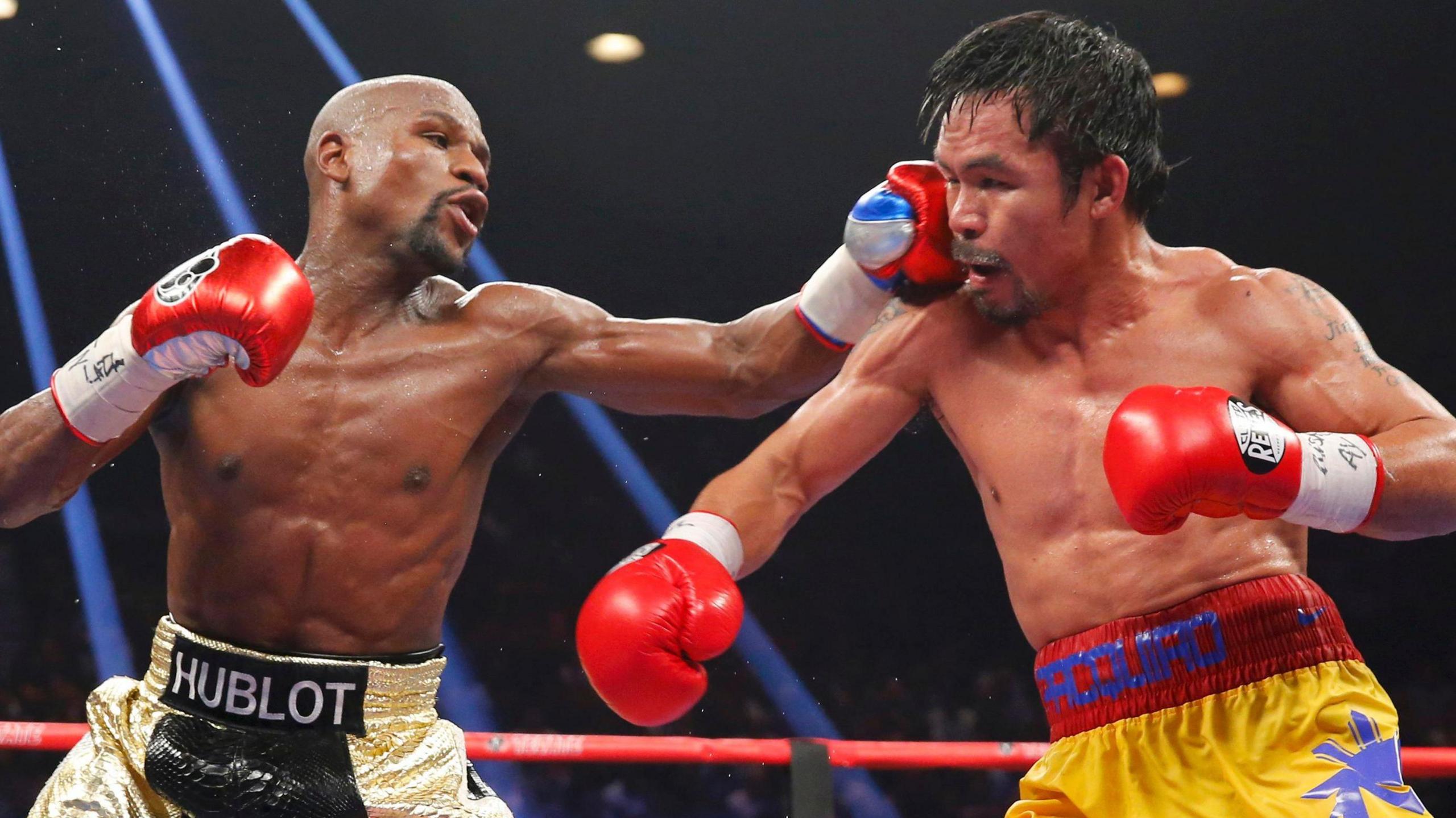
In 2015, Floyd Mayweather Jr. and Manny Pacquiao finally stepped into the same ring after years of stalled negotiations and public demand.
The fight shattered pay-per-view records and generated a level of anticipation boxing hadn’t seen in decades. It wasn’t just a fight; it felt like a cultural event. Eleven years later, that record still stands. That part feels different now.
At the time, the night was supposed to lift the sport. After years of “will they or won’t they,” fans believed the payoff would justify the wait. The promotion built it as the fight of the century. Casual viewers who didn’t normally follow boxing marked it on their calendars. Friends gathered. Bars filled. The sport briefly felt central again.

JUST IN: Real Reason Behind Floyd Mayweather’s Manny Pacquiao Rematc
But by the time it happened, both men had already had their defining nights. What unfolded was careful and technical. There was skill on display, but not the kind of urgency that casual viewers expected after all that buildup. People tuned in at peak hype and peak pricing. Many didn’t feel a reason to do it again.
The sport has produced quality at the top. Artur Beterbiev and Dmitry Bivol unified the light heavyweight division across two disciplined, high-level fights. Terence Crawford and Canelo Alvarez shared the ring in a matchup that carried real competitive tension. Inside boxing circles, those were significant nights. Beyond the regular audience, the reach was limited.
For millions of viewers, Mayweather-Pacquiao became their last major boxing purchase. The sport didn’t collapse afterward. It kept staging meaningful fights. The talent remained. What shifted was the habit. The spectacle peaked that night, and the momentum flattened in the years that followed. Plenty of big fights came and went, but none felt like an appointment the entire sports world had to keep.
Now the rematch is set. It will pull strong viewership and dominate coverage for a cycle. What it will not recreate is the stretch when the sport sat at the center of mainstream attention. That level of cultural pull likely peaked the night they first touched gloves.
