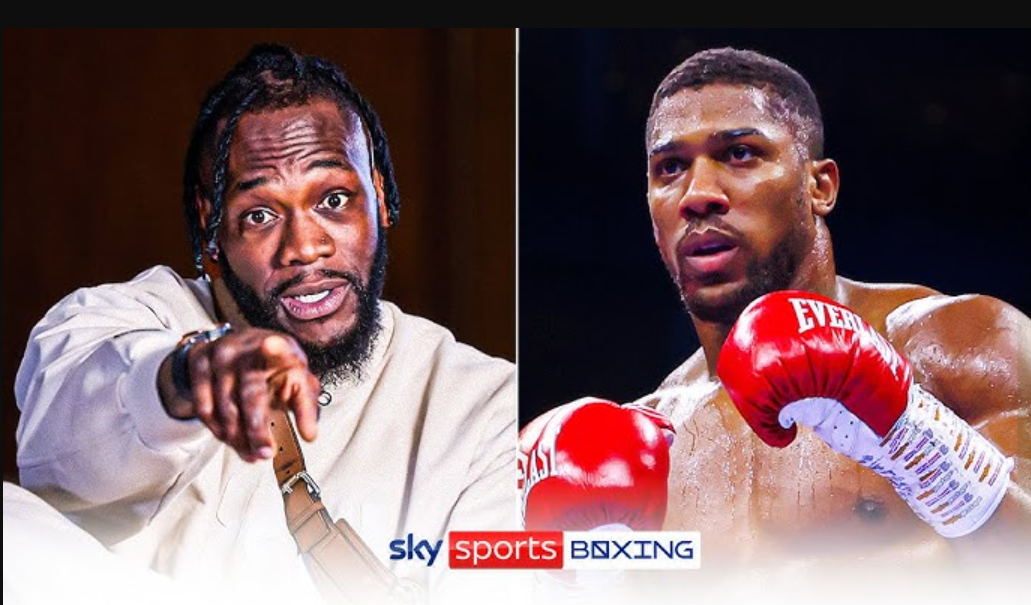
For the first time, Deontay Wilder has addressed in detail — and in his own words — the collapse of an undisputed heavyweight title fight with Anthony Joshua.
The clarification matters because the Joshua–Wilder saga has been repeatedly distorted over the years, with later negotiations and unrelated decisions used to blur the original timeline. Wilder’s recent remarks draw a clear line between what actually happened and what was later claimed, explaining precisely when — and why — the fight fell apart.
The $50 Million Offer That Was Rejected
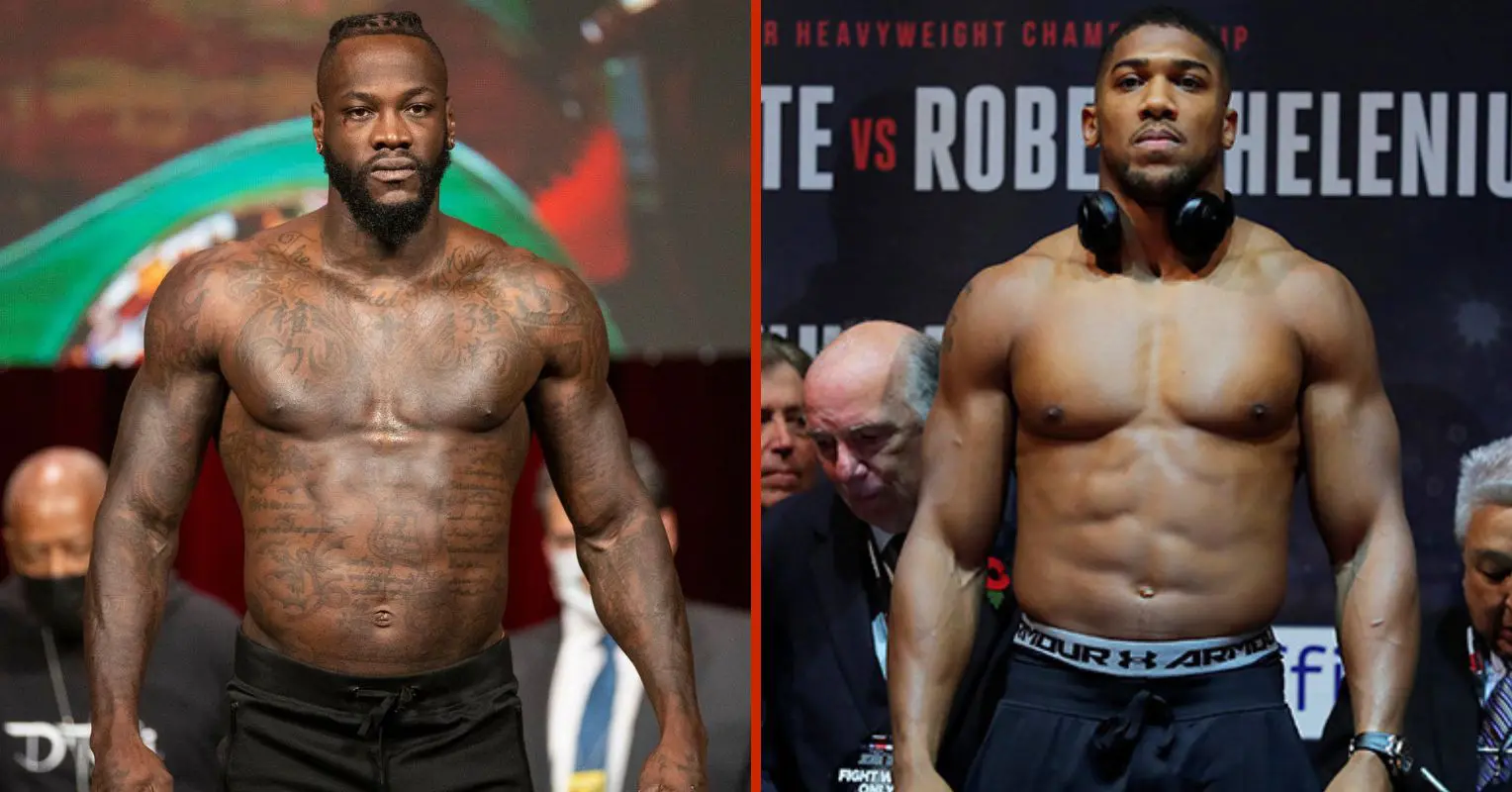
In 2018, the WBO, IBF, and WBA champion, Joshua, publicly demanded a guaranteed $50 million to fight WBC ruler Wilder in the United States. That figure was met.
READ: VIDEOS: Why Logan Paul Tried to Steal Anthony Joshua’s Chain at Jake Paul Fight
As WBN exclusively reported at the time, Wilder’s team — backed by Showtime — produced a written term sheet confirming the offer. Wilder was authorized to make the proposal public after Joshua named his price.
Speaking recently on Cigar Talk, Wilder confirmed that sequence, explaining that once Joshua requested the figure, sponsors and broadcasters immediately stepped forward, confident the fight would generate far more through pay-per-view and commercial revenue.
Wilder said he was instructed to announce the offer publicly — a decision later questioned by critics, despite the existence of written documentation.
That documentation was outlined by Wilder’s co-manager, Shelly Finkel, in a June 2018 WBN exclusive, in which he confirmed that Matchroom Boxing had received the terms but had never issued a response.
Wembley Counteroffer Accepted — Then Silence
After rejecting the U.S. offer, Joshua countered with a £15 million proposal to fight at Wembley Stadium.
Contrary to popular belief, Wilder accepted those terms.
As contracts were exchanged, Finkel requested clarification on two specific points, a routine part of negotiations at that level. According to WBN’s reporting at the time, no response was ever received.
Shortly afterward, the World Boxing Association ordered Joshua to agree terms with mandatory challenger Alexander Povetkin.
Rather than continue toward the undisputed fight, despite active negotiations, Joshua and promoter Eddie Hearn moved immediately toward the mandatory defense.
The WBA Exception That Was Never Requested
Hearn later cited pressure from the WBA as the reason the Wilder fight could not proceed. That explanation did not withstand scrutiny.
In a second June 2018 WBN exclusive, Finkel revealed that Joshua never requested an exception from the WBA — something the organization had previously granted for major unification bouts, including Wladimir Klitschko’s.
Finkel stated that had Joshua asked, the WBA would almost certainly have approved the Wilder fight over the mandatory defense.
The sanctioning body, therefore, was not the obstacle it was later portrayed to be.
Where the Narrative Went Wrong
The confusion surrounding Joshua vs. Wilder stems from comments made years later, during a different phase of both fighters’ careers.
Promoter Lou DiBella has acknowledged that Wilder did decline a Joshua offer, but that occurred after the undisputed fight had already collapsed and during a later DAZN-era window.
Joshua did not sign with DAZN until 2022, making those discussions unrelated to the $50 million Showtime offer, the Wembley acceptance, or the failed 2018 unification attempt.
Those timelines were repeatedly merged, leading to a misunderstanding of how the original collapse occurred.
Wilder’s Position — Then and Now
Wilder has consistently maintained that he was willing to compromise, even accepting a lower financial structure than other champions had received, while remaining true to his word in subsequent fights.
His position has not materially changed. What has changed is the clarity surrounding the sequence of events and the willingness to address them directly.
A Fight That Finally Happened — Then Didn’t
Wilder and Joshua eventually signed contracts to fight in December 2023, agreeing to face each other in a long-awaited matchup.
Both fighters were placed in separate bouts on the same Day of Reckoning card, with the intention of meeting afterward.
That plan unraveled when Wilder suffered a loss to Joseph Parker, while Joshua won his fight, ending any immediate path to the matchup.
The proposed rescheduled fight for March 2024 never materialized. Instead, Joshua faced Francis Ngannou on the same night he had been expected to meet Wilder.
The Record, Corrected
Wilder’s recent comments do not rewrite history. They confirm it.
World Boxing News reported the facts as they unfolded in 2018:
– A $50 million offer was made in writing
– A Wembley fight was accepted by Wilder
– Clarifications were requested and ignored
– No WBA exception was sought
– Joshua chose a mandatory defense instead
The later claim that Wilder “turned down” Joshua belongs to a different period, involving different broadcasters and different negotiations.
With Wilder now addressing the collapse directly — and the modern chapter closed — the timeline is no longer in dispute. What remains is a clearer understanding of how long it took for the record to be accurately reflected.
