Author

Admin

Browsing

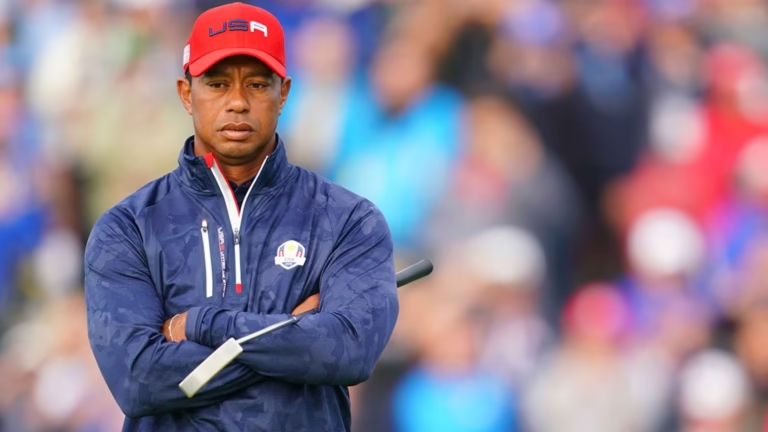
Jackson Koivun ends Tiger Woods’ long-standing mark after 30 years

Surpassing a Tiger Woods record is no small feat, and Jackson Koivun has just done it.

Woods did not just dominate golf in the late ’90s; he changed the way people saw the sport. So when someone starts drawing parallels to Tiger at any stage of their career, it is worth paying attention.

The 20-year-old Koivun has already made a name for himself with several strong showings on the PGA Tour, backing up every bit of that growing reputation.

READ: The sport Tiger Woods almost played instead of golf before getting

It looks like we are only scratching the surface of what Koivun can do. There is every chance he will be a fixture near the top of leaderboards for years to come.

The buzz around him is not just coming from fans or media – plenty of established players have taken notice too, impressed by both his skill and maturity.

Koivun clearly has what it takes to not only compete but also contend for titles right now. But he is not in any hurry. He understands that there is no need to rush things.

He plans to stay at Auburn University to complete his junior year before turning fully professional. It is a move that speaks volumes about his patience and long-term approach.

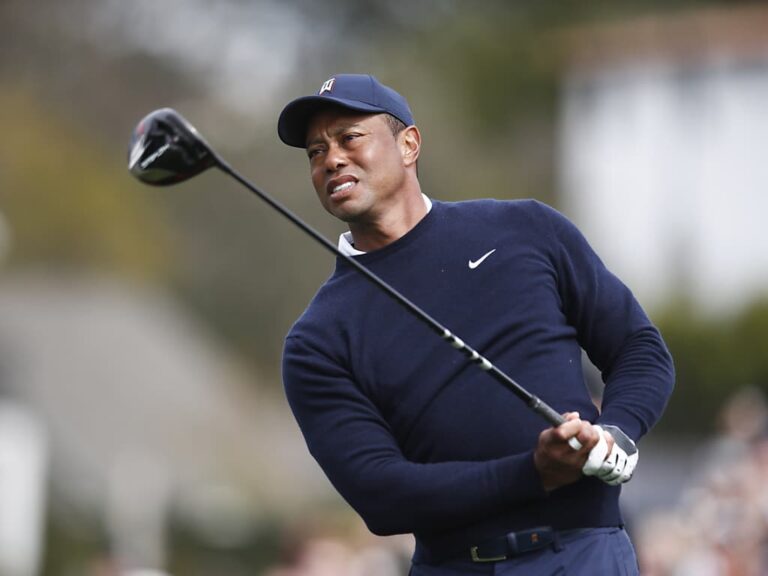
Jackson Koivun breaks a 30-year-old Tiger Woods record

Photo by Jed Jacobsohn/Getty Images


Koivun secured his PGA Tour card for the 2026 season through the PGA TOUR University Accelerated programme, a path not many have taken at his age.

Turning down an immediate shot at the tour speaks volumes about his self-belief, even if it raised a few eyebrows.

But recent events show there is substance behind that confidence.

At the Amer Ari Invitational in Hawaii, Koivun delivered back-to-back rounds of 62, giving him a two-shot lead at 20-under-par heading into the final round at Mauna Lani Resort.

This feat set a new college record for the lowest 36-hole score relative to par, overtaking Tiger Woods’ mark set three decades ago when he shot rounds of 65 and 61 at the Pac-10 Championship.

The fact that record lasted so long underlines just how impressive Koivun’s play has been this week.

Jackson Koivun is looking like a future star

It is easy to see why so many people are excited about the young golfer from San Jose, California. He appears to have the right mindset to go along with his skills, which can only help him as he moves forward.

Koivun has already shown consistency by making seven out of nine cuts on the PGA Tour, along with two top-5 finishes and four top-25s.

And while matching Woods’ achievements in professional golf would be a massive challenge for anyone, Koivun has already shown enough talent and potential to believe he could have a long and successful career on the PGA Tour.

He certainly seems to understand that it is important not to rush things. With his steady approach and growing experience, there is every reason to think he will find success down the line.

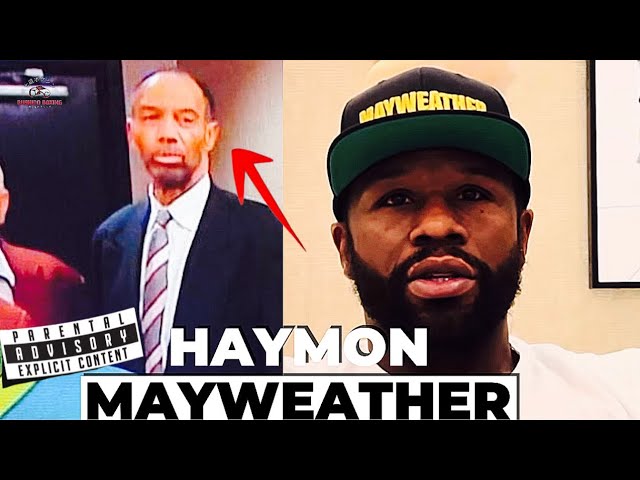
Floyd Mayweather Saves Al Haymon From Public Embarrassment Amid $340M Showtime Lawsuit Tied to Pacquiao, McGregor Fights

Floyd Mayweather has a friendly bout scheduled against Mike Tyson this spring. Ideally, the boxing world should be buzzing around the apparently mismatched exhibition. But it is not. As often happens in Mayweather’s case, conversations mostly center on money. In a notable development, the world’s richest boxer decided to file a $340 million lawsuit against Showtime Networks and its former president, Stephen Espinoza.

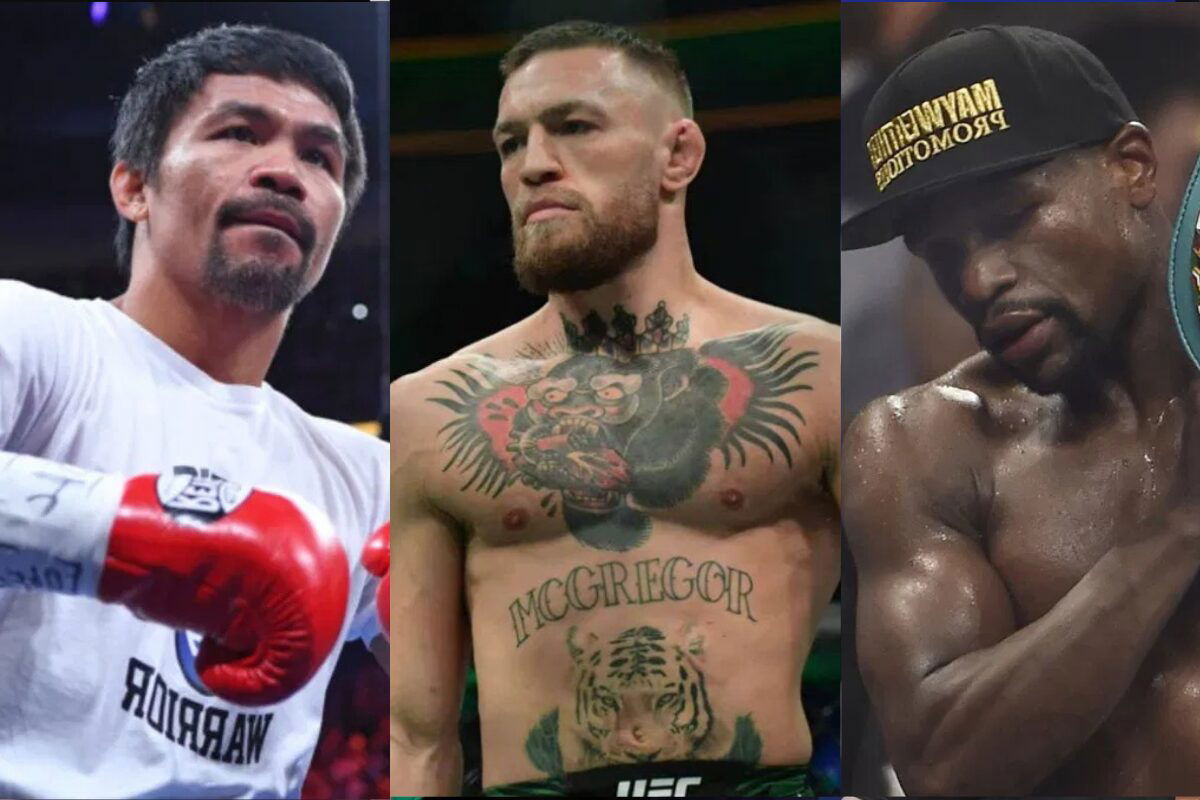
Years ago, the partnership produced some of Mayweather’s most iconic fights, including the bout against Manny Pacquiao and later with Conor McGregor. Adding intrigue to the turn of events now drawing attention across the boxing world is that recent reports suggest Floyd Mayweather may have gone easier on one of the figures included in the lawsuit – his former manager, PBC boss Al Haymon.

feature-image

JUST IN: Why Gervonta Davis’ Career Is No Longer Fully in His Own Hands

Floyd Mayweather may overlook former manager in legal action vs. Showtime

Dana Rafael revealed the development through a tweet. Posting the full 25-page filing on his official X account, the award-winning journalist wrote, “Floyd Mayweather sues Showtime & Stephen Espinoza for $340M, claiming they assisted Al Haymon, his former manager, of stealing that much from him.”

The tweet immediately caught the attention of users. One wondered why Mayweather chose to go after Showtime and Espinoza but spare Haymon. In response, Rafael added, “Based on what I’m told, Floyd has already quietly settled with Haymon. I don’t know that for sure, but that’s the word.”

While Rafael may have shared what his sources relayed, another user offered a different angle. According to that user, people close to the situation said Al Haymon had contracts structured well in advance to protect him from lawsuits down the road.

It may still take time before clearer details about the multi-million-dollar litigation emerge.

Mayweather’s court fight surprises network boss Stephen Espinoza

In the lawsuit, Mayweather claimed Showtime and Espinoza colluded with his former manager, Al Haymon, to misappropriate fight earnings. The damages sought are reportedly around $340 million, which Mayweather believes represents his share from some of the biggest fights he participated in, including the Mayweather–Pacquiao bout and the Mayweather–McGregor fight. Reportedly, Mayweather made approximately $600 million from the 2016 Pacquiao fight alone.

Stephen Espinoza weighed in on the lawsuit. A lawyer himself, he was careful not to comment on legal specifics that could potentially prove self-incriminating. Speaking with Compass on the Beat, he said he had yet to review the lawsuit. “I have not seen the paperwork,” he said before adding, “I’ve seen the reports, I’ve seen the descriptions, and as usual, the attorneys don’t want me out there publicly saying it.”

Emphasizing his reputation, Espinoza said he had acted fairly in all his dealings. “I’m proud of my reputation. I think it’s one of integrity,” the former Showtime president said. “I’ve never done anything to make sure that a fighter got less than every penny that he deserved.”

Still, Espinoza could not hide his surprise at the development. Being sued shocked him personally, and he said he does not fully understand why Mayweather is pursuing legal action against him.

What continues to draw attention is the timing of Mayweather’s lawsuit. It came nine years after he fought his last professional bout, the 50th, against Conor McGregor. So what pushed the boxing great to pursue legal action now?

With multiple reports hinting at possible financial strain for the former world champion and Olympian, some believe money pressure, rather than newly discovered wrongdoing, could be behind the move. Fans will have to follow closely as further developments emerge in this massive legal fight.

For much of late 2025, Gervonta Davis appeared to be managing the timing of his own exit from professional boxing.

He spoke openly about stepping away, questioned what the sport still offered him, and leaned toward exhibition-style opportunities rather than traditional title pathways.

At the time, the direction looked deliberate.

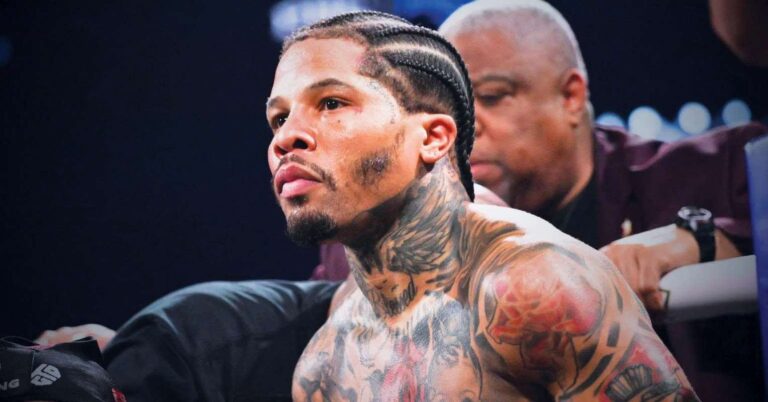
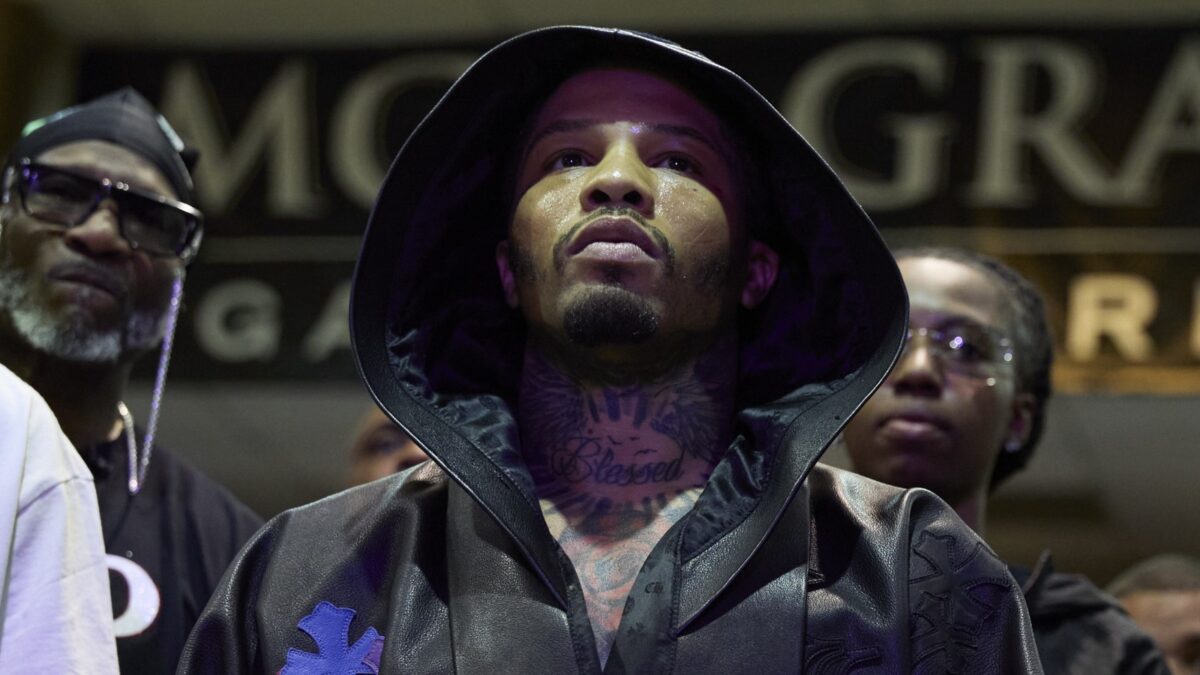
Gervonta Davis wearing a black robe before his ring walk at the MGM Grand in Las Vegas.

JUST IN: Anthony Joshua has counter-offer for Islam Makhachev and Khabib

A Planned Exit, Then a Loss of Control
Fighters change their minds. Some retire and return. Others step away briefly before deciding they want back in. That cycle is familiar in boxing.

What separates Davis’ situation is not the idea of fighting again, but how much control he now has over whether that can happen.

Recent reports suggest Davis wants to resume his career. Yet there is no confirmed opponent, no announced date, and no promotional timetable.

In a sport built around scheduling and certainty, that absence matters.

Availability Becomes the Limiting Factor
As the situation currently stands, Davis is dealing with legal issues that directly affect his ability to return to the ring. He has been released on bond in Miami and has a separate active warrant from Baltimore.

If that situation is not resolved, the consequence is simple. A fighter who cannot guarantee availability risks losing the ability to be licensed, scheduled, or cleared to compete.

In the most basic terms, freedom becomes part of the equation. The legal process will proceed as it does, and boxing does not wait for it.

Athletic commissions need certainty. Promoters and broadcasters plan months in advance. When doubt replaces reliability, cards move on without the fighter involved.

When Boxing Moves Forward
The lightweight division does not pause. The WBA’s decision to remove Davis as champion already showed how quickly the landscape can change.

Rankings shift. Mandatory situations change. Opponents make other plans. Once that happens, a return becomes less about ability and more about timing.

Davis remains at an age where elite fighters can still deliver defining performances. But boxing history is clear. Prime years lost to inactivity are rarely recovered.

The window does not close with an announcement. It closes when the sport no longer holds space for an individual.

Inside the industry, fighters are judged not only by record but also by availability. When uncertainty replaces scheduling, leverage fades and momentum moves elsewhere.

In late 2025, Davis appeared to be closing a chapter by choice. In early 2026, that choice may no longer rest entirely with him.

No judgment is required to understand the stakes. If a clear path back to competition cannot be established, boxing will continue as it always has — forward.

In practical terms, that is how many careers end. Not with a farewell, but with an absence that quietly becomes permanent.

Anthony Joshua has counter-offer for Islam Makhachev and Khabib Nurmagomedov’s famous Dagestan offer

Anthony Joshua doesn’t want to be sent to Dagestan for two-three years and forget – but he is interested in a visit.

The two-time unified heavyweight boxing champion currently lives in Dubai, where he stopped by PFL’s latest event on Saturday night. As usual, their show at the Coca-Cola Arena was headlined by Usman Nurmagomedov, who choked out Alfie Davis in the third round of their clash to retain his belt.

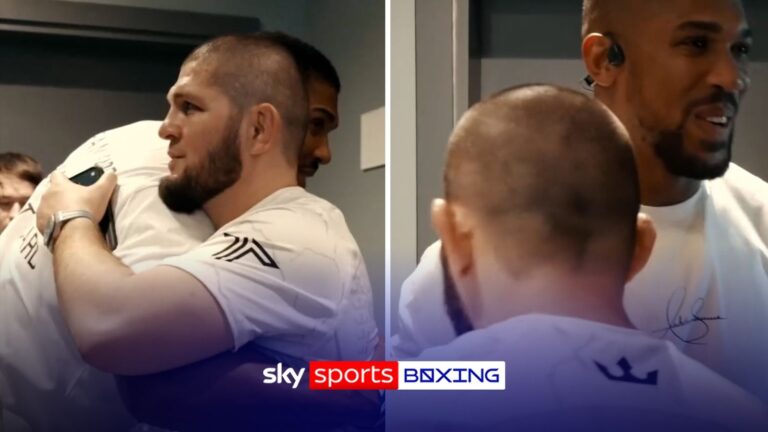
Before the fight, Joshua headed backstage to meet with the famed Nurmagomedov team, which included an all-star corner. Khabib Nurmagomedov headed up proceedings alongside Javier Mendez, while Usman’s brother Umar and the legendary Islam Makhachev filled out the corner.

Anthony Joshua meets Islam Makhachev, in a PFL t-shirt, backstage

READ: Why Canelo Is Frustrated He Never Got a Rematch With Crawford

Anthony Joshua wants brief visit to Dagestan to train with Islam Makhachev

During his visit to the Nurmagomedov dressing room, Anthony Joshua spent time with Khabib Nurmagomedov. But he seemed particularly keen to meet with Islam Makhachev and show him something on his phone.

The two-weight UFC champion was the last person Joshua met before heading back to his seat, and was quick to take out his phone and show Makhachev something. They didn’t appear to laugh at whatever was shown, but the pound-for-pound great did tell him that he ‘should come’ to Dagestan.

Joshua then made reference to the popular ‘2-3 years Dagestan’ meme, which is used when someone is not masculine and it is suggested that they head to the Russian town to learn to fight and become tougher.

The boxing champion joked that he might not be willing to visit for two or three years, but instead might make a trip for two to three weeks, which drew a big laugh from the room.

Anthony Joshua meets with PFL MMA CEO John Martin

It wasn’t just the Nurmagomedovs who got a chance to meet with the heavyweight boxing star. He sat next to Dakota Ditcheva throughout the night, and also had a chance to meet with the new CEO John Martin.

Joshua and Martin could be seen shaking hands, with the Brit asking him ‘how’s business’. The former Turner Broadcasting boss took over last year, and is already making wholesale changes including getting rid of the world tournament and allowing long-time executives Donn Davis and Peter Murray to move on.

The sport Tiger Woods almost played instead of golf before getting injured

Before he was the greatest golfer of all time, Tiger Woods eyed a career in a different sport. 

Even as a young boy, Woods was a natural athlete, possessing a level of hand-eye coordination that seemed almost supernatural for a boy his age. While the world eventually came to know him for his mastery of golf, his earliest athletic dreams were tethered to another sport.

It was a sport that his dad played, and in his youth, Woods wanted to follow in his footsteps. But an injury prevented him from doing so, forcing him to the tee box instead.

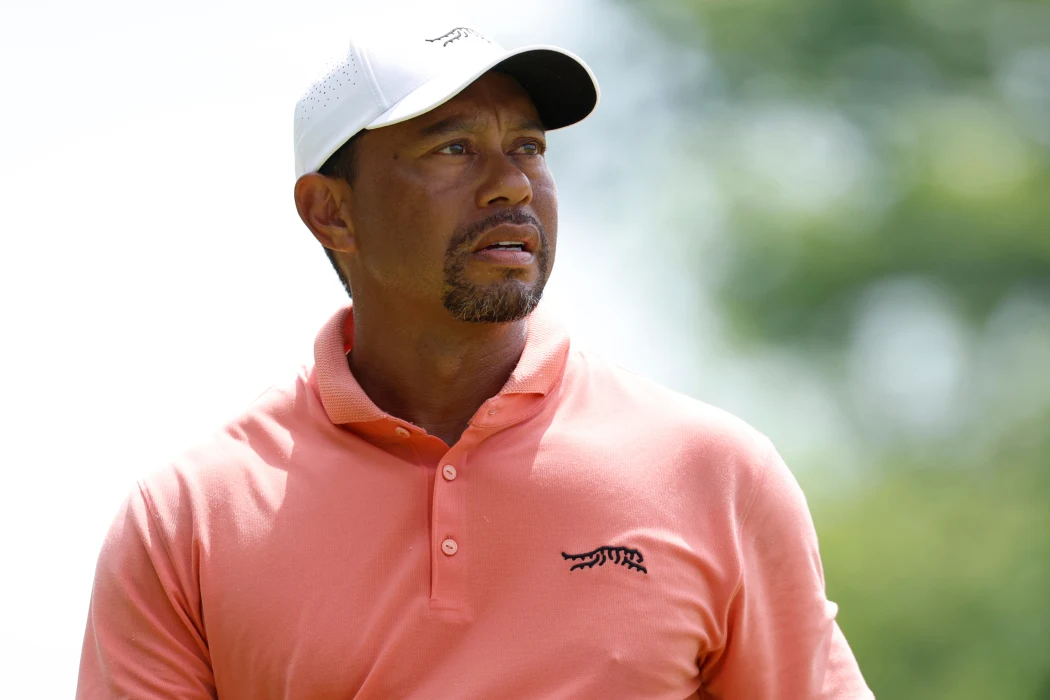
Tiger Woods

READ: How Phil Mickelson Owes All His Success to Tiger Woods: Former

Tiger Woods could have played baseball instead of golf

The sport that captured Tiger Woods’ heart before golf was baseball.

Growing up in Southern California, Tiger was a standout ballplayer. He played shortstop and was known for having a cannon of an arm.

His father, Earl Woods, was actually a trailblazer in the sport himself. Earl had been the first Black baseball player in the Big Seven Conference while playing for Kansas State.

Woods once noted that baseball was actually his favorite sport as a child. He loved the team dynamic and idolised his father.

However, the transition away from the plate happened early. In a 1999 interview with the Atlanta Constitution, Woods revealed that he was forced to quit baseball because of an injury to his rotator cuff.

So instead, he turned to golf, and became the greatest to ever play his second sport.

The five-time major winner who wanted to play baseball

Playing baseball is not a uncommon childhood dream among the best professional golfers in the world. There are plenty of transferable skills between throwing a pitch and swinging a golf club.

Brooks Koepka might be the most famous example. He once stated in an interview that he finds golf boring compared to baseball. He grew up in a baseball family. His great-uncle, Dick Groat, was an NL MVP,  Brooks has often admitted he’d much rather be a professional baseball player if he had the choice.

He also suffered an injury as a child. He was in a car accident and was prevented from playing contact sports, so he took up golf instead.

He obviously took to golf, winning five majors as a professional, but has always seemed to long for another sport. He’s a baseball fan forced to play golf at the highest standard.

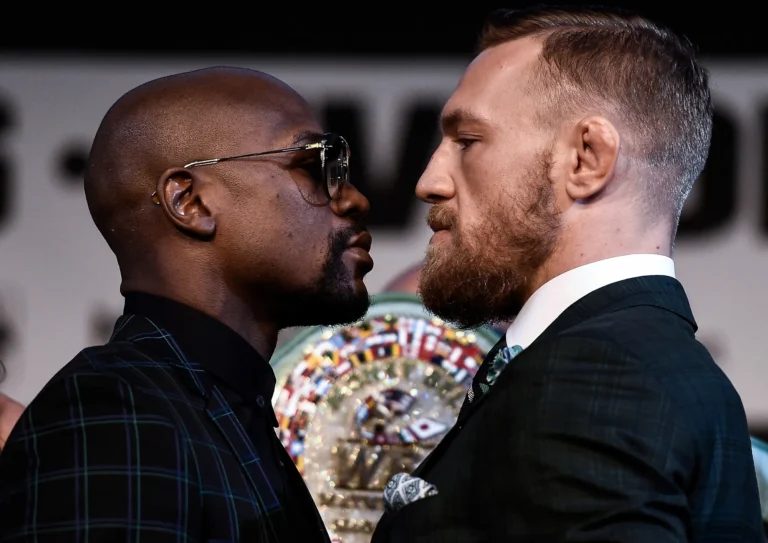
On August 26, 2017, Floyd “Money” Mayweather Jr. and Conor “The Notorious” McGregor stepped into the ring at T-Mobile Arena in Las Vegas for one of the most anticipated — and debated — events in combat sports history.

An undefeated, five-division boxing world champion against a two-division UFC champion making his professional boxing debut. It was a spectacle that transcended both sports, generated hundreds of millions of dollars, drew an audience of casual fans who had never watched a boxing match, and ultimately delivered a more entertaining night than most expected. Whether you call it a legitimate super fight or the most profitable sideshow in boxing history, Mayweather vs. McGregor was an event that cannot be ignored.

How the Fight Came Together

Floyd Mayweather Jr vs Conor McGregor - Highlights

JUST IN: Why Canelo Is Frustrated He Never Got a Rematch With Crawford

The idea of Mayweather fighting McGregor had been floating in the combat sports atmosphere for years before it became reality. McGregor, never shy about calling out anyone in any discipline, had been publicly challenging Mayweather since 2015. The trash talk escalated on social media, in post-fight interviews, and across television appearances, with each man claiming he would destroy the other. UFC president Dana White initially dismissed the concept entirely. “Here’s what I think the chances are of the fight happening,” White said on The Dan Patrick Show. “About the same of me being the backup quarterback for Brady on Sunday” — a reference to Super Bowl LI.

But the financial logic was irresistible. Mayweather’s 2015 fight with Manny Pacquiao had generated approximately $623 million in total revenue and 4.6 million pay-per-view buys, making it the richest fight in history. McGregor, meanwhile, had become the UFC’s biggest star and its most bankable pay-per-view attraction. A crossover fight between the two would combine fanbases that barely overlapped, creating a potential audience larger than anything either sport had seen individually.

Negotiations entered an “exploratory phase” in early 2017. By March, Mayweather was publicly calling on McGregor to “sign the paper.” By May, McGregor had reportedly agreed to terms. The fight was officially announced on June 14, 2017 — a 12-round professional boxing match at 154 pounds (junior middleweight), sanctioned by the Nevada State Athletic Commission. Mayweather would come out of a two-year retirement at age 40, putting his perfect 49-0 record on the line. McGregor, 28, would make his professional boxing debut against arguably the greatest defensive fighter who ever lived.

The Four-City Press Tour: A Promotional Masterpiece

The promotional campaign for Mayweather-McGregor was unlike anything combat sports had ever seen. From July 11-14, 2017, the fighters embarked on a four-city international press tour — Los Angeles, Toronto, Brooklyn, and London — that played out less like a traditional boxing promotion and more like a traveling arena show blending elements of professional wrestling, stand-up comedy, and a celebrity roast.

McGregor arrived at the Los Angeles opener in a tailored suit — later revealed to be a deliberate troll of Mayweather’s wardrobe — and immediately began attacking Mayweather’s age, his fighting style, and his well-publicized tax issues. Mayweather, never one to be upstaged, produced a check for $100 million from the Pacquiao fight and offered to bet McGregor his entire purse. The Toronto stop escalated further, with McGregor commanding 15,000 fans to chant obscenities at Mayweather in unison. In Brooklyn, Mayweather told his entourage to “form Voltron” and surrounded McGregor on stage. The London finale saw both men play to a European crowd firmly in McGregor’s corner.

ESPN’s Dan Rafael and Brett Okamoto scored the press tour round-by-round as if it were a fight — a gimmick that perfectly captured the spectacle. The tour served its purpose brilliantly: it generated daily headlines across mainstream outlets that rarely covered boxing, created viral social media moments, and convinced millions of casual fans that this event was unmissable. For a deeper look at how the fighters prepared their verbal arsenals.

The Undercard: Gervonta Davis, Badou Jack, and a Star-Making Night

The Showtime pay-per-view card wasn’t just one fight. The undercard featured meaningful bouts that delivered on their own merits. Gervonta “Tank” Davis, Mayweather’s prized protégé, defended his IBF junior lightweight title against Francisco Fonseca, stopping the unbeaten contender in the eighth round. Nathan Cleverly defended his WBA light heavyweight title against Badou Jack in a competitive fight that Jack won by split decision. The card also featured welterweight contender Yordenis Ugás, who would later become a world champion himself.

Fight Night: Round by Round

The national anthems set the tone. Imelda May sang the Irish national anthem. Demi Lovato performed “The Star-Spangled Banner.” McGregor entered first to a roar from the heavily Irish-flavored crowd. Mayweather followed, his face covered in a mask reminiscent of Bernard Hopkins. Robert Byrd was the referee. The 14,623 fans inside T-Mobile Arena represented an $80 million-plus live gate — a record at the time, surpassing the $72 million gate from Mayweather-Pacquiao.

The early rounds surprised almost everyone. McGregor came out aggressive, pressuring Mayweather, going to the body, and landing clean shots — including a first-round uppercut that snapped Mayweather’s head back. McGregor’s movement was unorthodox but effective, and his size (he was taller and longer than Mayweather) created angles the champion hadn’t seen before. Through three rounds, McGregor was competitive and arguably ahead on the cards.

But Mayweather had seen it all before — or at least the parts that mattered. His game plan, as he later explained, was deliberate: “Our game plan was to take our time, go to him, let him shoot his shots early and then take him out down the stretch.” Starting in the fourth round, Mayweather began stepping forward, increasing his punch output, and timing McGregor’s increasingly looping shots. By the sixth round, the momentum had decisively shifted. McGregor’s output dropped as fatigue set in — the consequence of a fighter accustomed to five-round UFC fights now deep into the championship rounds of a 12-round boxing match.

The Finish: Tenth-Round TKO

By the tenth round, McGregor was running on fumes. He opened the round with a body shot that was ruled a low blow, showing his last signs of life. Mayweather, patient as always, waited for McGregor to exhaust his final reserve, then went to work. A series of right hands along the ropes staggered McGregor badly. His legs buckled. He stumbled forward. More punches landed without meaningful response. McGregor never went down — he stayed on his feet throughout — but referee Robert Byrd had seen enough. He stepped in and stopped the fight at 1:05 of the tenth round.

Floyd Mayweather Jr. improved to 50-0, surpassing Rocky Marciano’s legendary 49-0 record. It was the first time Mayweather had finished a fight since stopping Victor Ortiz in 2011. All three judges had Mayweather ahead at the time of the stoppage — Dave Moretti scored it 87-83, Burt Clements 89-82, and Guido Cavalleri 89-81.

“I owed them for the Pacquiao fight,” Mayweather told Showtime’s Jim Gray after the fight. “I think we gave the fans what they wanted to see.”

McGregor was gracious in defeat: “He’s composed, he’s not that fast, he’s not that powerful, but boy is he composed in there. I thought it was close though and I thought it was a bit of an early stoppage. I was just a little fatigued. He was just a lot more composed with his shots.”

The CompuBox Numbers

The punch statistics told the story of a fight that changed midstream. Through the first five rounds, McGregor held a 51-40 edge in landed punches. From rounds six through ten, Mayweather outpunched McGregor 130-60. For the fight overall, Mayweather landed 170 of 320 punches (53 percent), while McGregor landed 111 of 430 (26 percent). More telling was Mayweather’s power-punch accuracy: he connected on 58 percent of his 152 power shots. McGregor landed just 25 percent of his power punches.

The numbers confirmed what the eye test showed — McGregor had enough skill and size to make the early rounds competitive, but lacked the conditioning, defensive technique, and ring generalship to sustain his attack against an all-time great who was content to weather the early storm.

The Money: Breaking Down a Billion-Dollar Event

Mayweather-McGregor was one of the most financially successful events in the history of combat sports. While exact figures were protected by confidentiality agreements, the known numbers are staggering.

The Nevada State Athletic Commission disclosed guaranteed purses of $100 million for Mayweather and $30 million for McGregor. Those were floor figures. With his share of the promotion, Mayweather’s total earnings were projected to exceed $275 million. McGregor’s total take was estimated to surpass $100 million — roughly 20 times his typical UFC purse of $1.6 million. The fight generated an estimated 4.3 million pay-per-view buys at $89.95 ($99.95 in HD), the second-highest total in history behind Mayweather-Pacquiao. The live gate of approximately $80 million set a new boxing record. Total revenue was projected between $550 million and $600 million.

Casino.org calculated that Mayweather earned approximately $59,347 per second of fight time and $3.5 million per minute. The combined purse exceeded the GDP of more than 140 countries. For a boxing industry perspective on the financial stakes.

What It Meant for Boxing

The legacy of Mayweather-McGregor within boxing is complicated. Critics argued that the fight diminished the sport by elevating a novice to the biggest stage — that it was a circus dressed up as a championship event, and that every dollar spent on a crossover spectacle was a dollar not spent on legitimate contenders. There was merit to this argument. McGregor had zero professional boxing experience. No boxing commission in any previous era would have sanctioned the fight.

Defenders countered that the event introduced millions of new fans to boxing, generated massive revenue for the sport’s ecosystem, and demonstrated that boxing could still produce cultural events on the scale of the Super Bowl. The fight’s 4.3 million pay-per-view buys dwarfed anything any active boxer other than Mayweather had done. The press tour alone generated more mainstream media coverage than the sport had received in years.

Perhaps the most significant legacy was what followed. The crossover model that Mayweather-McGregor pioneered — boxing against a non-boxer, sold on personality and spectacle rather than records and rankings — opened the door for the influencer boxing era. Jake Paul’s boxing career, which has generated millions of pay-per-view buys against former UFC fighters and aging champions, is a direct descendant of the template Mayweather-McGregor established. Whether that’s a good thing for the sport depends entirely on your perspective.

What It Meant for MMA

McGregor’s performance earned him more respect than many had predicted. He won early rounds against one of the greatest boxers ever, landed clean punches, and lasted ten rounds in his first professional boxing match. The UFC used the event as a proof of concept for the crossover appeal of its fighters. Dana White, who had initially mocked the idea, walked away from the event proclaiming satisfaction with the spectacle and McGregor’s performance.

For McGregor personally, the fight was transformative in financial terms — he earned more in one night than in his entire UFC career combined — but it marked the beginning of a decline in his MMA trajectory. He never recaptured his UFC momentum in the same way, losing three of his next four UFC fights. The lure of another massive payday in boxing kept the door open for rematch talk that persisted for years.

The Fighters: Where They Stand

For Mayweather, the McGregor fight was the final chapter of a perfect career — 50-0, five divisions, 15 world titles, and earnings estimated at over $1 billion across his career. He announced his retirement in the ring after the fight and, for the most part, kept his word regarding sanctioned professional bouts. He has since fought exhibitions against various opponents, including YouTuber Logan Paul, but has not returned to the official record books.

Mayweather’s place in boxing history was already secure before the McGregor fight. The 50-0 record, the defensive mastery, the financial empire — these are the pillars of his legacy. The McGregor fight added the exclamation point and the bank statement.

McGregor’s post-fight path has been more turbulent. He returned to the UFC and lost to Khabib Nurmagomedov in 2018. He knocked out Donald Cerrone in 40 seconds in 2020, but then dropped back-to-back fights to Dustin Poirier in 2021, the second of which ended with a broken leg. McGregor has remained one of the most recognizable athletes on the planet, but the combination of injuries, inactivity, and personal controversies has complicated his legacy.

The Full Fight Card

For the record, the complete Showtime PPV card on August 26, 2017:

  • Floyd Mayweather Jr. def. Conor McGregor — TKO, Round 10 (1:05), junior middleweight (154 lbs)
  • Badou Jack def. Nathan Cleverly — Split Decision (114-112, 113-113, 115-111), WBA light heavyweight title
  • Gervonta Davis def. Francisco Fonseca — TKO, Round 8, IBF junior lightweight title
  • Andrew Tabiti def. Steve Cunningham — Unanimous Decision

By the Numbers

  • Venue: T-Mobile Arena, Las Vegas
  • Attendance: 14,623
  • Live gate: ~$80 million (record at the time)
  • PPV buys: ~4.3 million (second-highest in history)
  • PPV price: $89.95 ($99.95 HD)
  • Total revenue: Estimated $550-600 million
  • Mayweather guaranteed purse: $100 million
  • McGregor guaranteed purse: $30 million
  • Mayweather estimated total earnings: $275 million+
  • McGregor estimated total earnings: $100 million+
  • Mayweather’s final record: 50-0 (27 KOs)
  • Referee: Robert Byrd
  • Broadcast: Showtime PPV
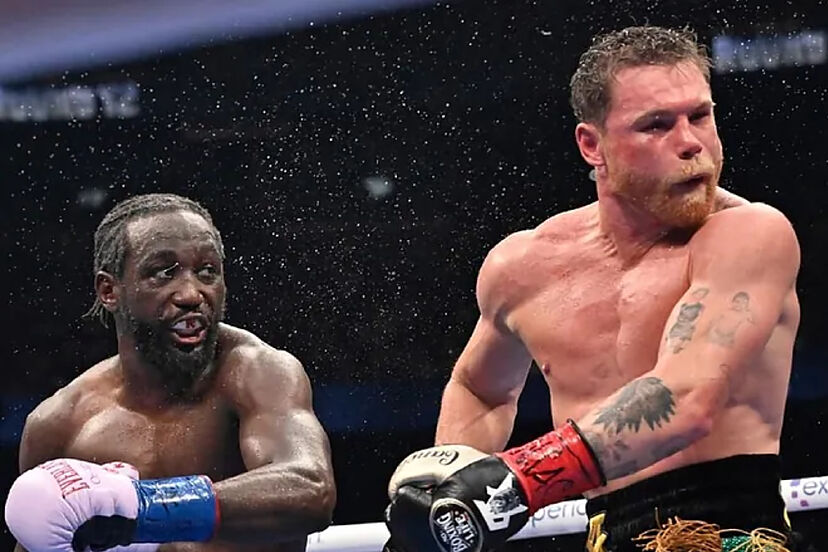
Months removed from that epic night in Las Vegas, Terence Crawford and Canelo Alvarez are still at the center of the conversation.

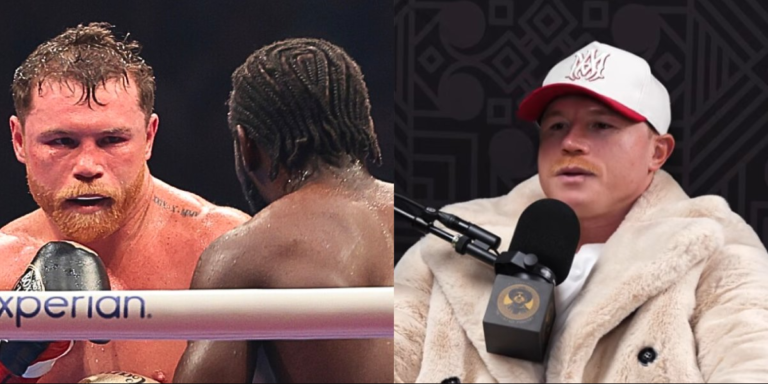
I was there live at Allegiant Stadium when Crawford delivered a performance that stunned the building, defeating Canelo to become a three-time undisputed champion. It was the kind of night that leaves a crowd frozen—part disbelief, part appreciation—as Crawford controlled every phase of the fight and put on a masterclass that had everyone in awe.

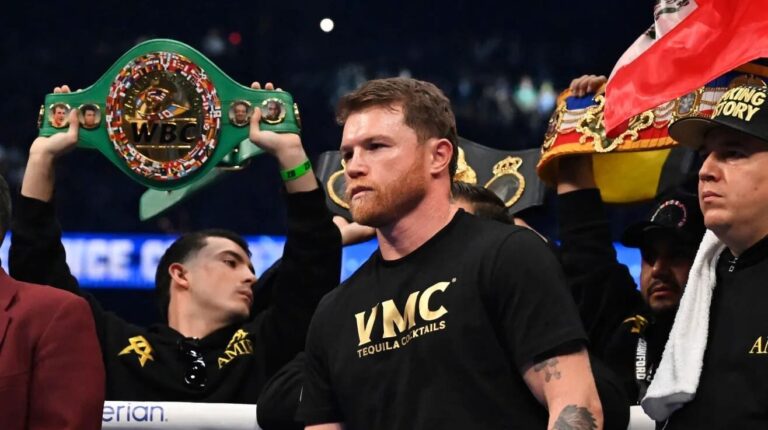
Now, with the dust settled and Crawford officially retired, Canelo is opening up about the fight that never happened next. Sitting down with Rick ‘Versace’ Reeno on the Mr. Versace Podcast via the Ring Magazine YouTube channel, Canelo spoke candidly about his frustration over the rematch falling through.

“I always give him credit, but we needed to run it back,” Canelo said. “That’s why it was tough. After the fight, I said we needed a rematch because I didn’t feel the way I wanted to feel. I needed to make that fight happen again, and I know it would have been different. I think for him to truly deserve all the credit, he needed to give me the rematch—obviously.”

At the same time, Canelo acknowledged the reality of the situation. Crawford’s decision to retire ultimately closed the door on any second meeting. ‘But I will. He decide to retire, and we need to accept that and move forward,’ he said. “But it was his decision. He decided to retire, and we have to accept that and move forward.”

The performance still stands as one of the most memorable nights in recent boxing history. And while Canelo clearly wanted another chance to run it back, this rivalry ends not with a sequel—but with acceptance, even if the frustration hasn’t fully faded.

Anthony Joshua sends heartfelt private messages to Jake Paul after deadly Nigeria car crash days after Netflix fight

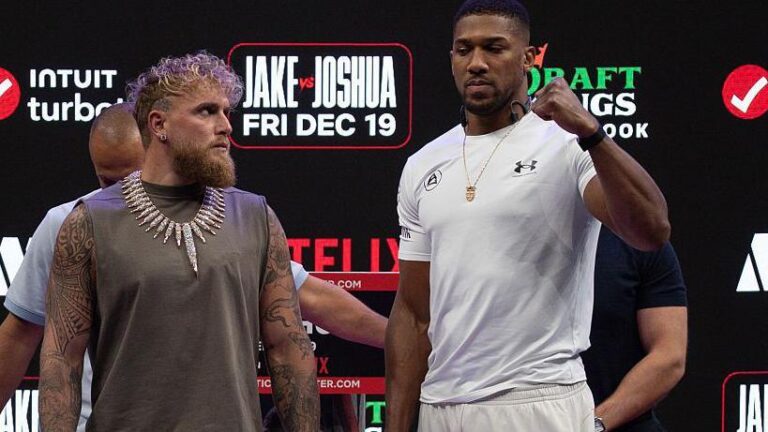
Anthony Joshua did not just walk away from his fight with Jake Paul carrying another win. Just days later, his life changed in a way no boxing match ever could. Only ten days after knocking out Jake Paul in their Netflix fight in Miami, Joshua was involved in a serious car crash in Nigeria that took the lives of two people very close to him.
The crash happened on December 29 while Joshua was traveling with lifelong friends Kevin Latif “Latz” Ayodele and Sina Ghami, along with a driver. Joshua survived, but both Ayodele and Ghami lost their lives. The former heavyweight world champion has since been grieving deeply and has stayed mostly quiet, sharing only short tributes online.

Even in that painful time, Joshua noticed a gesture that meant a lot to him. Jake Paul’s promotion company honored his late friends during a boxing event in Puerto Rico on January 3. Their names were printed on the ring canvas. That moment led to private messages between Joshua and Paul that showed respect beyond the ring.

READ: “Sue Me”: Why Deontay Wilder Was Held Back by Security as He S

Anthony Joshua appreciates Jake Paul and Most Valuable Promotions for honoring his late friends

The tribute was done by Most Valuable Promotions, the company founded by Jake Paul and Nakisa Bidarian. After seeing the gesture, Joshua personally reached out to Paul and MVP co-founder Nakisa Bidarian.

Speaking to SunSport, Bidarian shared how the exchange went. He said, “They had some tremendous exchanges. Anthony Joshua was a gentleman. He sent us a few very nice messages given we took some efforts around our January 3 card to recognize Sina and Latz. There is a deep respect there for each other as human beings.”

Joshua, 36, continues to honor his late friends through social media posts and short videos as he mourns their loss. His promoter Eddie Hearn has said Joshua is still grieving but believes he will keep fighting with their memory in his heart.

Meanwhile, Jake Paul, 29, is currently under medical suspension following the fight, where Joshua stopped him in six rounds and left him with a broken jaw. Bidarian said Paul can return to sparring in June and may fight again by August.

Bidarian also shared Paul’s mindset after facing Joshua. He said, “Jake studied AJ and felt he could make him miss. He landed some nice shots, but his cardio gave out. That is the reality of that fight.” He added that Paul has been honest about opponents he does not want to face, naming David Benavidez, but said Paul is confident against most others.

Bidarian was in London to announce a new deal between MVP and Sky Sports, which marks the broadcaster’s return to boxing. The upcoming April 5 event at Kensington Olympia will be headlined by Caroline Dubois and Terri Harper.

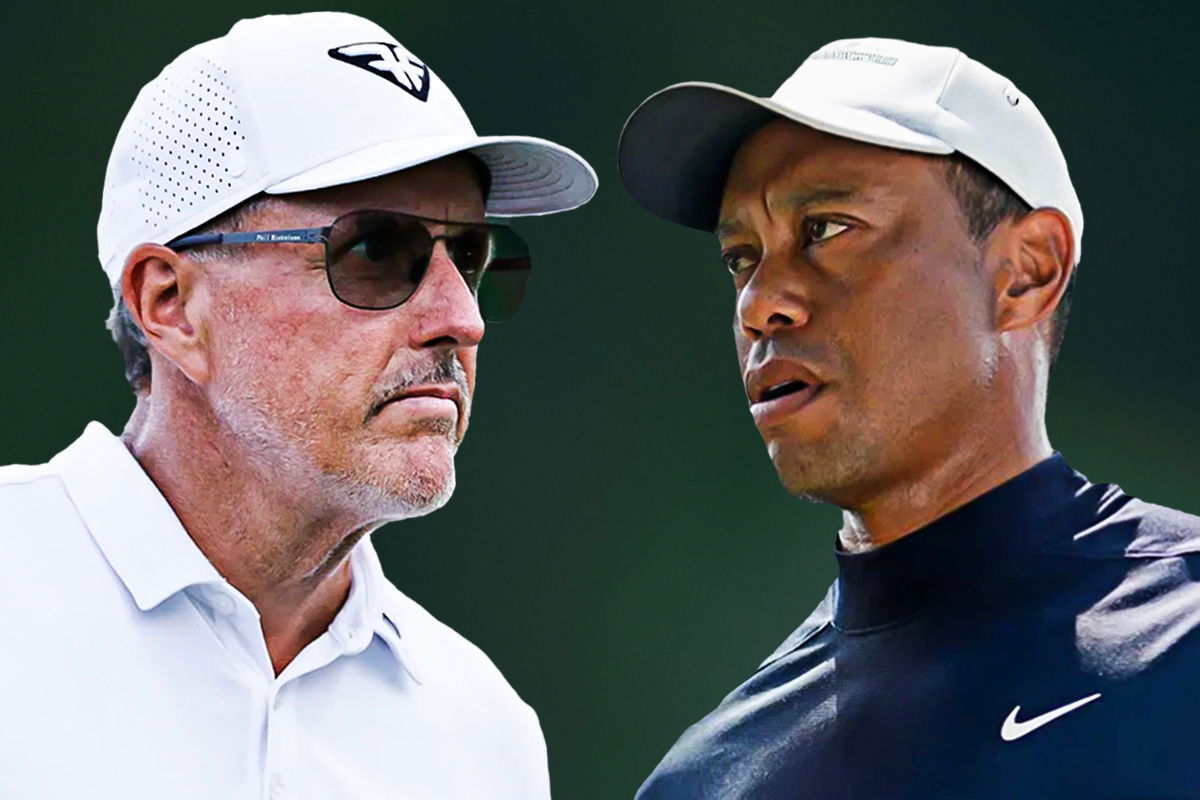
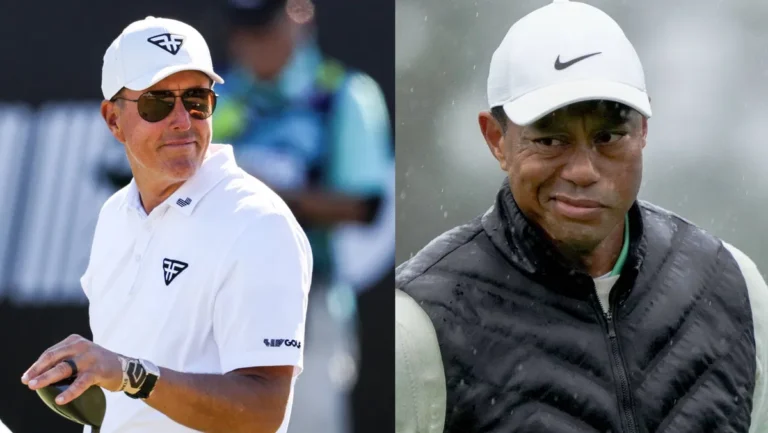
Phil Mickelson Owes All His Success to Tiger Woods: Former LIV Golf Veteran

The Phil Mickelson-Tiger Woods rivalry has dominated golf headlines for years. But there’s another side to that story, an inspirational one about how competition creates greatness. Former LIV golfer Pat Perez added to it, sharing how Woods not only dominated Lefty, but he transformed him into a Hall of Famer, as we all know now.

“The intimidation factor that Tiger had is like nothing; you know, you might not see it again,” Perez told hosts on the Golf Subpar Podcast on February 5th. “As great as Phil is, Tiger pushed him right here. He’s got 46 wins, six majors, and won one at 50.”

Between the two of them, they have 127 PGA Tour wins and 21 major championships. The last major came in 2021 when Mickelson won the PGA Championship at 50 years, 11 months, and 7 days, becoming the oldest major winner.

feature-image

READ: Why Tiger Woods threatened to kick member off team in menacing

In their early pairings from 2006 to 2009, Woods consistently edged Mickelson by narrow margins—71 to 73, 68 to 75, and 72 to 71. Overall, in rounds where both played in the same group head-to-head on the PGA Tour, the stats were as follows:

  • Woods shot a lower round 19 times

  • Mickelson shot lower 15 times

  • They tied 4 times.

Mickelson hired swing coach Butch Harmon in 2007, the same coach who had worked with Woods; he overhauled his fitness routine and sharpened his short game. The move paid off immediately, as Lefty won his first Players Championship that spring.

At the 2012 AT&T Pebble Beach Pro-Am, Mickelson shot 64 to Woods’ 75, an 11-stroke demolition that earned him the nickname “Tiger Slayer.” It wasn’t luck. It was the result of years spent responding to Woods’s game.

“He owned me head-to-head until ’07. Over the course of my career, I believe that he pushed me to achieve a higher level of play,” Mickelson admitted in 2015. It wasn’t just respect; it was recognition that his entire career trajectory had been shaped by one rival’s dominance.

Five years later, at the 2017 PGA Championship, Mickelson revealed just how profound Woods’s influence was.

“He forced everybody to work a little bit harder. He forced everybody to look at fitness as a big part of the game of golf, and I think that’s actually helped me with longevity,” Mickelson said. “I don’t think I would have had the same level of success had he not come around.”

Tiger Woods also helped Phil Mickelson elongate his career by pushing him to do better. He even said that the 15x major winner pushed him to swing harder. It was not just Mickelson who felt this. Ernie Els, who finished second to Woods multiple times in majors, echoed the sentiment.

“This guy was so special, and he absolutely changed the game. He got us to really elevate our games,” Els said.

The respect was mutual, though, as Tiger Woods also acknowledged how Phil Mickelson’s success pushed him.

“It has always pushed me,” Woods admitted of Lefty’s success in 2019. “My entire career, and Phil will probably attest to this, we’ve always looked at the board to figure out where one another are. So we’ve always had that type of enjoyment of competing against one another.”

The rivalry that defined an era continues to shape both legends. Today, their paths have diverged, but the transformation Woods sparked in Mickelson remains his lasting legacy.

Absence now, return expected—Phil Mickelson still wants to play

Phil Mickelson is still very committed to competing, even though he missed the first two LIV Golf events because of a family health issue. He stressed that he and his wife needed to stay home, but he also said he was looking forward to getting back to work and competing again soon.

Mickelson’s announcement made it clear that there is a balance between personal priorities and professional passion. Although family matters forced him to leave Riyadh and Adelaide. The HOF later stated that he “can’t wait to compete again” and looks forward to rejoining his teammates as soon as possible.

Mickelson’s drive won’t go down because he isn’t playing. The six-time major champion has shown time and again that he loves to compete, whether on the PGA Tour or in LIV Golf’s ever-changing landscape. This suggests that his competitive fire is still strong, even though he took a break.

Mickelson will be back soon, possibly as soon as LIV Golf Hong Kong. That way of thinking shows both his personal strength and his desire to compete at the highest level. It shows that the “push” that drove him earlier in his career still drives him now.

Canelo Alvarez gives honest assessment of what went wrong against Terence Crawford

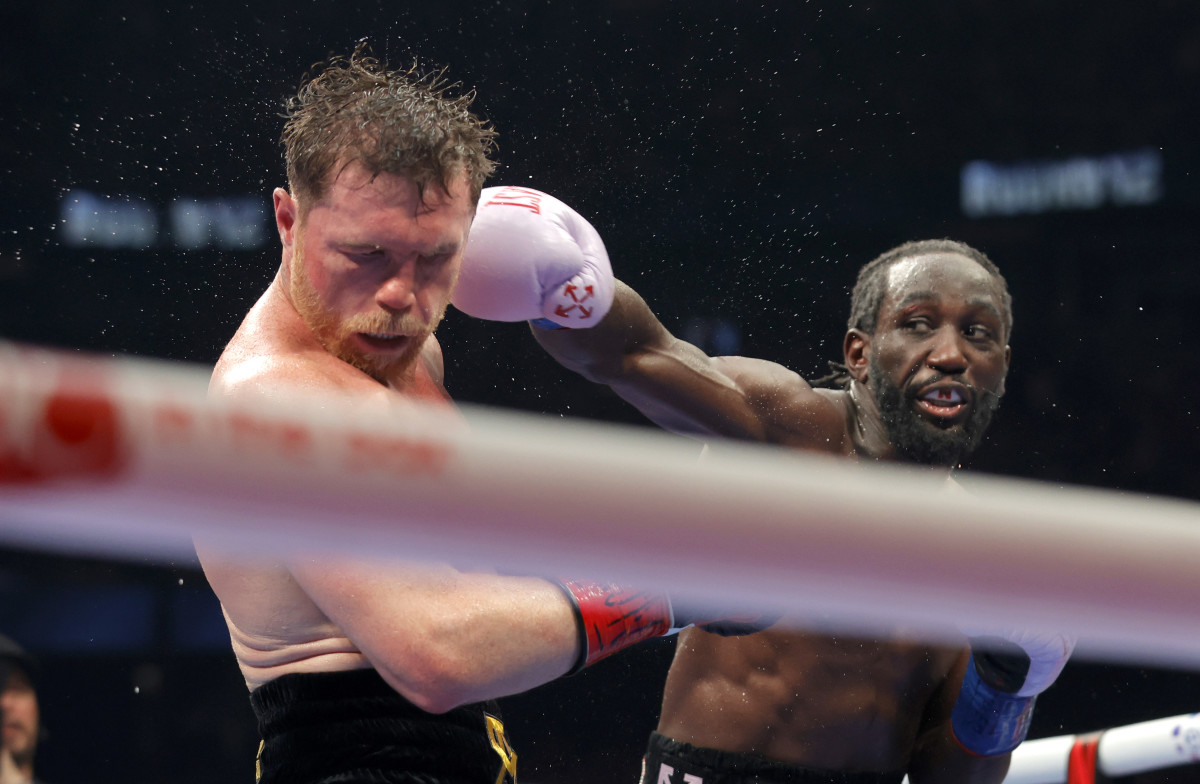
At Allegiant Stadium on September 13, 2025, Terence Crawford (42-0, 31 KOs) defeated Canelo Alvarez (63-3-2, 39 KOs) by unanimous decision.

This historic win saw Crawford become a three-division undisputed champion and four-division lineal champion. Crawford decided to retire soon after, and Canelo has now returned to the public eye, appearing on the Mr Verzace Podcast with Rick Reeno, discussing what went wrong for him in that defeat.

Canelo Alvarez Terence Crawford

JUST IN: Why Boxing icon Floyd Mayweather hit with multiple lawsuits over

Crawford beats Canelo to become the undisputed super middleweight king

The opening few rounds of Canelo-Crawford were cagey, with Crawford moving well and Canelo attempting to close the distance

As the fight progressed, “Bud” began to pick his punches impressively while staying mobile, avoiding heavy counters from his Mexican opponent.

Despite sustaining a cut late in the fight, Crawford could not be beaten, and he continued to box with poise, firing off eye-catching combinations. The Omaha native deserved the win, and the judges agreed, awarding him a unanimous decision win with cards of 116-112 and 115-113 (x2).

Canelo Alvarez addresses what went wrong against Crawford

Talking with Rick Reeno, Canelo discussed what went wrong against Crawford, while addressing the importance of moving forward:

“I try, but my body doesn’t respond. I have cramps in my leg, so, doesn’t respond the way I really want, but you know, it is what it is. We learn from that, and we move forward. And I know what mistakes I made in the fight, and in the camp too. But that’s what boxing’s about. 

“I think a winner doesn’t mean you need to win every time. You need to learn from everything, from the losses, take the losses, and learn from that and move forward and are still doing the things you love,” said Canelo Alvarez.

The Future for Canelo

Turki Alalshikh recently announced that Canelo Alvarez will be back in action on September 12 as part of the “Mexico against The World” card in Riyadh.

Crawford announced his retirement toward the end of 2025, seemingly extinguishing any hope of Canelo vs Crawford 2, but it seems the Mexican feels he has more to give, and all eyes turn to September 12 to see what Canelo Alvarez has left.