Tag

Floyd Mayweather Jr.

Browsing

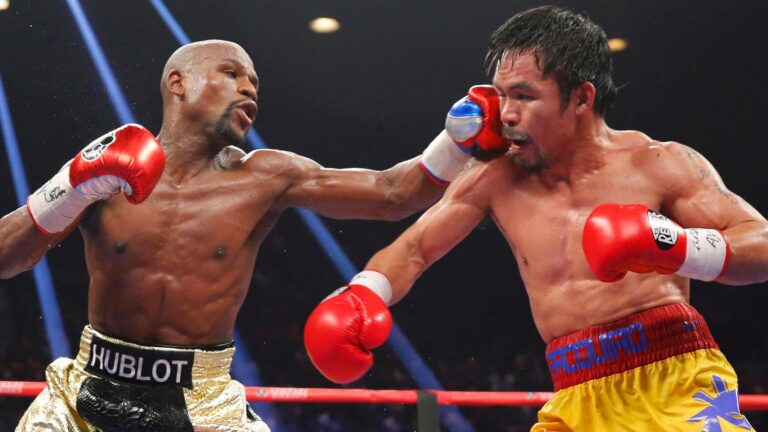
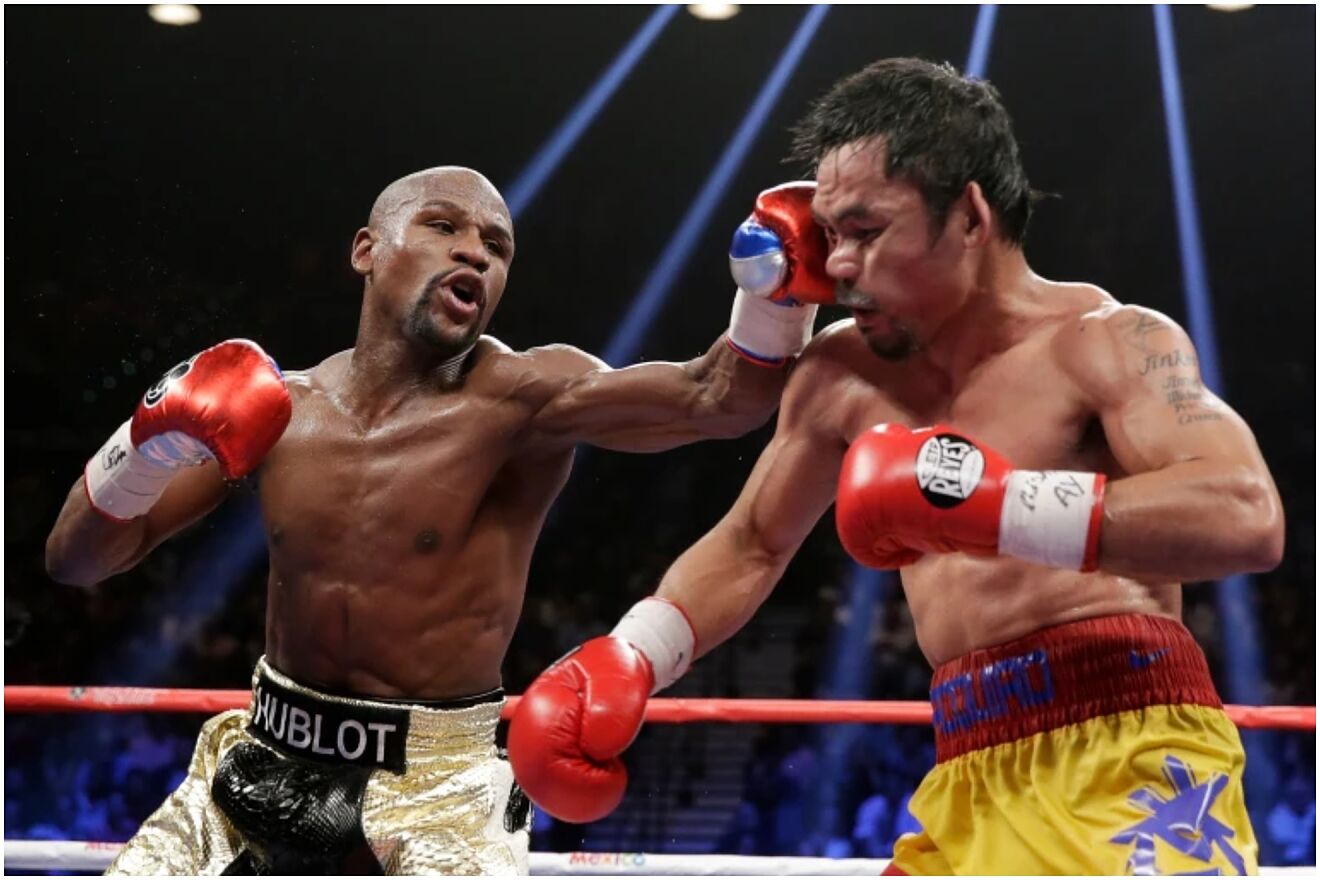
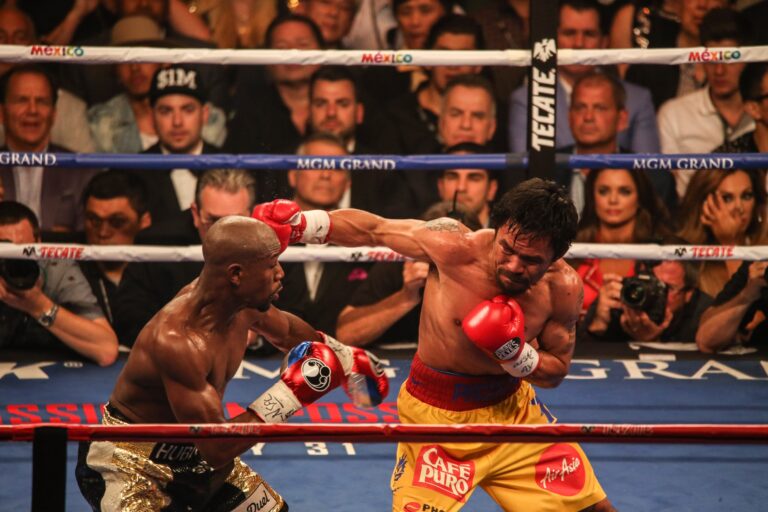
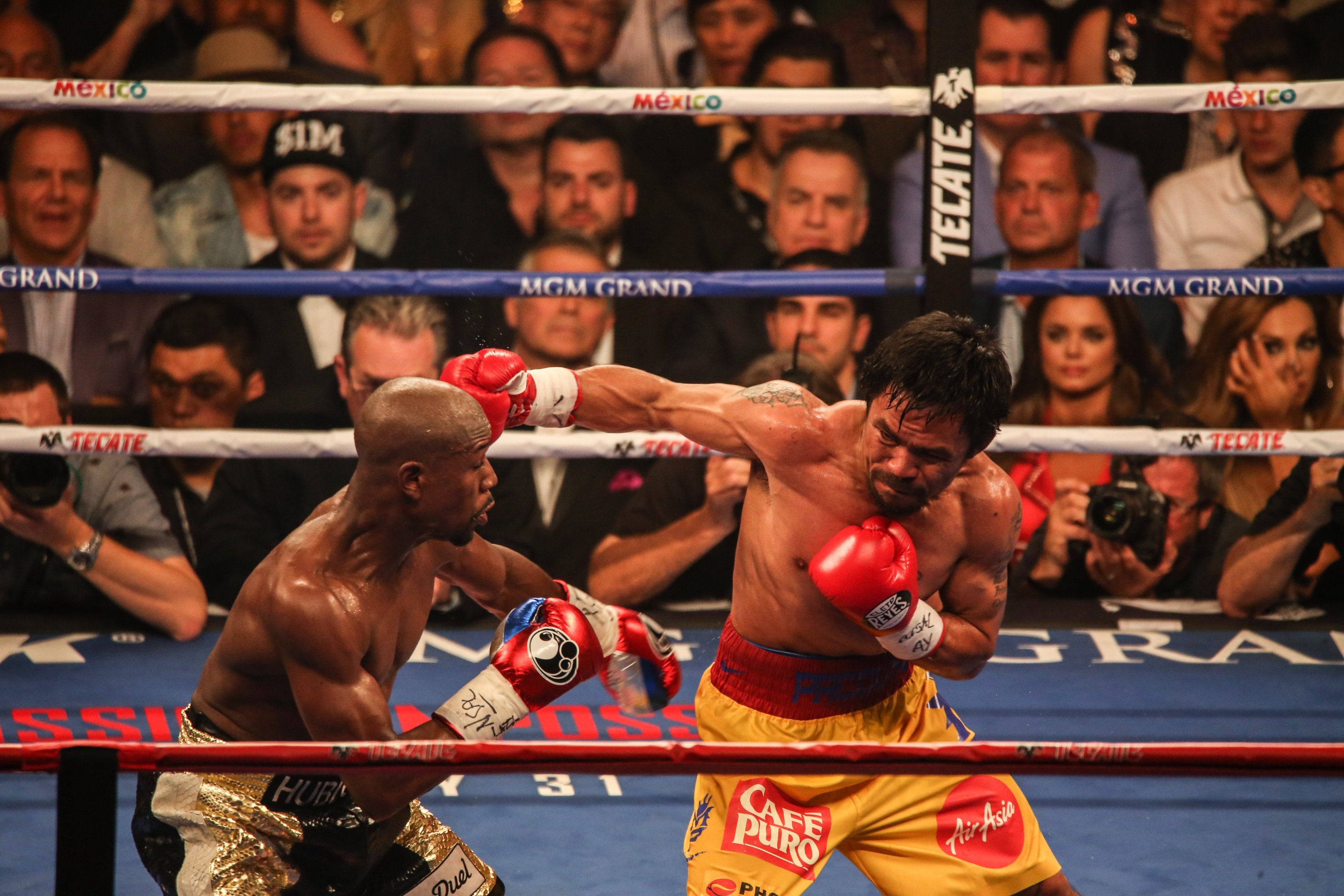
In 2015, Floyd Mayweather Jr. and Manny Pacquiao finally stepped into the same ring after years of stalled negotiations and public demand.

The fight shattered pay-per-view records and generated a level of anticipation boxing hadn’t seen in decades. It wasn’t just a fight; it felt like a cultural event. Eleven years later, that record still stands. That part feels different now.

At the time, the night was supposed to lift the sport. After years of “will they or won’t they,” fans believed the payoff would justify the wait. The promotion built it as the fight of the century. Casual viewers who didn’t normally follow boxing marked it on their calendars. Friends gathered. Bars filled. The sport briefly felt central again.

They shouldn't be doing it': Frank Warren on Mayweather vs Pacquiao 2 | Bad  Left Hook

JUST IN: Real Reason Behind Floyd Mayweather’s Manny Pacquiao Rematc

But by the time it happened, both men had already had their defining nights. What unfolded was careful and technical. There was skill on display, but not the kind of urgency that casual viewers expected after all that buildup. People tuned in at peak hype and peak pricing. Many didn’t feel a reason to do it again.

The sport has produced quality at the top. Artur Beterbiev and Dmitry Bivol unified the light heavyweight division across two disciplined, high-level fights. Terence Crawford and Canelo Alvarez shared the ring in a matchup that carried real competitive tension. Inside boxing circles, those were significant nights. Beyond the regular audience, the reach was limited.

For millions of viewers, Mayweather-Pacquiao became their last major boxing purchase. The sport didn’t collapse afterward. It kept staging meaningful fights. The talent remained. What shifted was the habit. The spectacle peaked that night, and the momentum flattened in the years that followed. Plenty of big fights came and went, but none felt like an appointment the entire sports world had to keep.

Now the rematch is set. It will pull strong viewership and dominate coverage for a cycle. What it will not recreate is the stretch when the sport sat at the center of mainstream attention. That level of cultural pull likely peaked the night they first touched gloves.

The dramas inside the Mayweather-Pacquiao II: Debts, redemption, and a 50-0 streak on the line

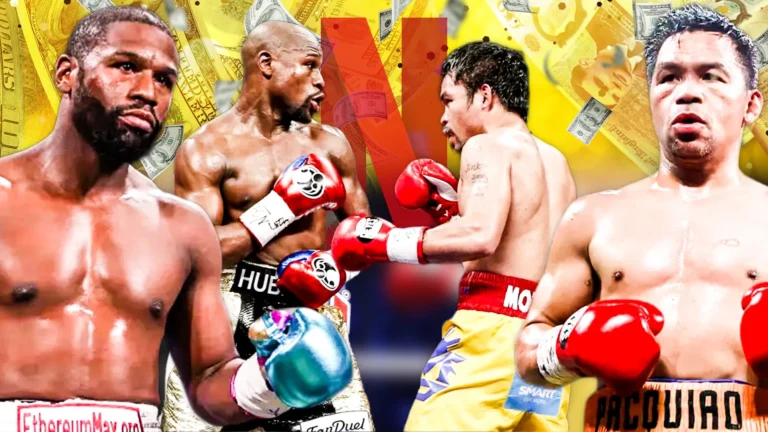
Since the announcement of Floyd Mayweather Jr. vs. Manny Pacquiao II was made official and set to stream live globally on Netflix from the amazing Sphere in Las Vegas, there has been an incredible firestorm of intrigue.

While the first “Fight of the Century” in 2015 shattered every financial record ever written in the historicl boxing book, the drama surrounding this sequel is a bit different than what it was back then, as we have a far more personal, complex, and determined match than a simple sports comeback.

Floyd Mayweather vs Manny Pacquiao in 2015

JUST IN: Canelo: There is only one way Terence Crawford can get the credit

Pacquiao’s eternal fountain of youth

Obviously, the first road to this rematch did not begin in a boardroom, but in a display of sheer grit. In July 2025, a 46-year-old Manny Pacquiao stepped into the ring against then-WBC welterweight champion Mario Barrios.

Defying every law of biology and argument in debates, Pacquiao produced a performance that will be there for the ages. He overwhelmed the 30-year-old champion for much of the night, only settling for a controversial majority draw after Barrios rallied in the final rounds. An insider said this to Uncrowned:

“It probably triggered something in Floyd’s head. Seeing Manny look that good against a current champion… it makes the business case undeniable

?

Now 47, Pacquiao is clear about his motivation:

“I want Floyd to live with the one loss on his professional record and always remember who gave it to him

Mayweather’s current $340 million legal war

While Pacquiao is chasing legacy over money or fame, Floyd “Money” Mayweather appears to be navigating a much more turbulent landscape. Earlier this month, the undefeated legend filed a staggering $340 million lawsuit against his longtime broadcast partner, Showtime, and its former president, Stephen Espinoza.

The allegations could not be clearer. First, we have a misappropriated funds case, where Mayweather claims revenue from his biggest fights, including the 2015 Pacquiao bout and the 2017 McGregor spectacle, was concealed and diverted. Also, there are some “lost” documents that the Mayweather organization claims were purposely hidden or erased when they requested the financial records of those fights.

Espinoza, on the other side, has vehemently denied these claims, citing that his entire career is built on integrity and ensuring fighters got every penny they deserved.

However, despite this situation, Mayweather remains confident, believing that he beat Manny once so this time will be the same result. Pacquiao, meanwhile, views this as his opportunity to finally get rid of Mayweather’s streak and enter in a new legendary place in the boxing world.

Why Pacquiao–Mayweather 2 Finally Came Together After Years of Failed Talks

For years, a rematch between Manny Pacquiao and Floyd Mayweather Jr. seemed inevitable — and yet always out of reach.

According to Pacquiao and his promotional team, the long-anticipated sequel only came together when timing aligned, negotiations simplified, and the right platform emerged to deliver the fight on a global scale.

“This was a lot of work,” said Jazz Mathur, chairman and CEO of Limitless X Holdings, Inc. and CEO of Manny Pacquiao Promotions. “It took a lot of time. Manny tried — I wouldn’t say failed — but planted seeds. It just took the right time and the right team in place to be able to get it done.”

Floyd Mayweather Jr. Defeats Manny Pacquiao in Boxing's Big Matchup - The New York Times

READ: Netflix officially announces Mayweather vs Pacquiao 2 with date an

The rematch, scheduled for Sept. 19 in Las Vegas, will be streamed globally by Netflix, marking one of the streaming giant’s most significant moves into traditional professional boxing.

Years of Talk, Little Movement

Pacquiao and Mayweather first fought in May 2015 in what was billed as “The Fight of the Century.”

While Mayweather won by unanimous decision, the bout’s legacy remained divisive despite generating more than $600 million in total revenue and a record 4.4 million pay-per-view buys.

In the years that followed, speculation about a rematch never fully faded — but talks repeatedly stalled.

The Ring Magazine reported in October that the two sides were again in discussions, with a fall date targeted. Even then, Mathur said, the biggest challenge was not convincing the fighters but navigating the layers around them.

‘Too Many Chefs in the Kitchen’

Mathur said the most persistent obstacle was the number of intermediaries involved over the years — and how deals were presented.

“The biggest barrier is sometimes there are people in the way who don’t present the deal the right way or aren’t able to get it closed,” Mathur said. “A lot of times people look after themselves rather than looking after the fighters and what the fans want.”

He said negotiations often broke down when too many voices attempted to control the process.

“When you have too many chefs in the kitchen, it always spoils the food,” Mathur said.

According to Mathur, once talks narrowed to the right decision-makers — and with a clear vision for distribution — progress accelerated.

Pacquiao’s Return Reignites Talks

Another turning point came when Pacquiao returned to the ring last year after a brief retirement. In July, the 47-year-old challenged Mario Barrios for the WBC welterweight title in Las Vegas, earning a majority draw.

“Manny came out of retirement. He did a return pro fight,” Mathur said. “Obviously Floyd sees that.”

Mathur said Mayweather’s competitive nature played a role in reopening discussions.

“Floyd’s very competitive,” he said. “He feels he can come in and do the same thing. So why not give it that chance?”

Mayweather, who retired undefeated at 50-0, recently announced plans to return to boxing in a professional capacity after an April 25 exhibition bout against Mike Tyson, clearing another hurdle toward finalizing the deal.

Pacquiao confirmed that earlier talks failed in part because he was unwilling to participate in an exhibition bout.

“I didn’t want an exhibition,” Pacquiao said in a recent interview. “I want a real fight.”

Netflix’s Global Platform Seals It

Ultimately, Mathur said Netflix’s reach was the final piece.

“Netflix is a global phenomenon,” he said. “We’ll have hundreds of millions of people viewing this. There are so many additional opportunities that come out of it.”

Rather than relying on a traditional pay-per-view model, the fight will be available to Netflix subscribers worldwide, expanding its potential audience beyond boxing’s core fan base.

More than 11 years after their first meeting, Pacquiao and Mayweather are set to revisit one of boxing’s most enduring rivalries — not because of nostalgia alone, but because, this time, the deal finally came together the right way

Floyd Mayweather Jr. Draws Heavy Backlash for Coming Out of Retirement Ahead of Mike Tyson Fight

Floyd Mayweather Jr’s unretirement announcement landed like a thud for a chunk of boxing fans who thought the book was closed on his professional fighting days. Just days ahead of his 49th birthday, the 50-0 boxer revealed to ESPN that he’ll return to professional boxing after his spring 2026 exhibition with Mike Tyson.

“I still have what it takes to set more records in the sport of boxing,” the boxing legend said in the written statement. “From my upcoming Mike Tyson event to my next professional fight afterwards — no one will generate a bigger gate, have a larger global broadcast audience, and generate more money with each event — then my events. And I plan to keep doing it with my global media partner, CSI Sports/FIGHT SPORTS.”

This comes after several exhibitions since 2017, a lawsuit claiming Showtime owes him “at least” $340 million, and a Tyson exhibition that already feels more like spectacle than sport. The context matters because Floyd Mayweather hasn’t boxed a real pro since 2017, when he stopped Conor McGregor to move to 50–0. Since then, it’s been spectacle bouts with Logan Paul, Mikuru Asakura, John Gotti III, and Tenshin Nasukawa.

JUST IN: Shakur Stevenson has two demands for fight with new champion Ryan Garcia

The Tyson bout, reportedly targeted for April 25 in the DRC (Democratic Republic of Congo), though other details remain unconfirmed, pairs two men who are a combined 107 years old. Tyson is coming off a lifeless loss to Jake Paul, 30 years his junior, in a Netflix event that did huge numbers and brutal reviews. The math here is simple: the draw is nostalgia and name value, not competitive relevance. Floyd Mayweather knows that. His statement leaned into gates and global audiences, not rankings or belts.

Mayweather calls himself ‘Money,’ and his career purses topped a billion dollars by some estimates. But recent reports about mortgages, lawsuits, foreclosures, and shaky real estate claims have poked holes in the untouchable image. None of that proves he’s broke. But it does explain why every new event feels like a cashing-in moment as much as a competitive one.

There’s also a sporting angle people keep circling back to. Mayweather would return to a division full of fighters half his age. Manny Pacquiao is also back in the pro ranks, which has reopened talk of a rematch of their 2015 bout. If Mayweather actually takes a sanctioned fight after Tyson, the risk is real. He built a brand on perfection. One loss at 49 doesn’t erase a 50–0 career, but it does change how the ending reads.

Fans not on board as Floyd Mayweather announces the end of his retirement

One fan wrote, “Bruh chill out Floyd. You not beating any real contenders.” That reaction isn’t just age-shaming. It’s about relevance. Mayweather hasn’t faced an active, elite boxer in nearly a decade. Coming back after dancing around exhibitions doesn’t convince fans he’s ready for a real contender.

Another fan pointed out, “This is a man who has wasted and spent all his money point blank and simple…..” Fans are connecting dots between the unretirement and the financial noise around Mayweather. Even if the reality is more complex, perception matters. When a fighter returns, talking about gates and money first, people assume the motivation is survival, not competition.

Someone else dove deeper as they wrote, “Floyd at 49 coming back to protect 50-0 after dancing around 60-year-old Mike? This is the biggest money grab since his Logan Paul fight. Boxing died in 2015 and these exhibitions are just the funeral. Who’s actually paying for this PPV circus?” This hits the core tension. The Tyson bout feels like a warm-up lap for cash, not a test. Fans who sat through the Logan Paul spectacle feel burned. The question isn’t whether people will watch. It’s whether they’ll respect it.

One skeptical fan chimed in with, “Retirement for Floyd is just a holding pattern. He steps away, lets the hype build, waits for the right opponent and the right bag, then magically remembers he has unfinished business. This is not a comeback, it is a scheduled deposit.” This reaction cuts to how fans read Floyd Mayweather’s career management. He’s always treated timing like leverage, not sentiment. Walk away, let scarcity do the marketing, then return when the numbers make sense. Fans aren’t buying the idea that this return is about legacy. They see a business model that’s worked before and expect him to run it back.

And finally, one fan added, “Man gonna lose and ruin his record lmao. Why do these old Greats not know when to let it go?” This one is less about hate and more about fear for the ending. Mayweather built his brand on control and perfection. Coming back at 49, even against carefully chosen opponents, introduces risk he never had to take. Fans have watched legends stay too long and get clipped, and that sticks.

The backlash isn’t really about whether ‘Money’ can still sell a fight. Everyone knows he can. It’s about what this version of selling represents. When Floyd Mayweather talks gates and global audiences first, fans hear a promoter, not a competitor. That doesn’t erase what he was. It reframes what he’s choosing to be now.

On August 26, 2017, Floyd “Money” Mayweather Jr. and Conor “The Notorious” McGregor stepped into the ring at T-Mobile Arena in Las Vegas for one of the most anticipated — and debated — events in combat sports history.

An undefeated, five-division boxing world champion against a two-division UFC champion making his professional boxing debut. It was a spectacle that transcended both sports, generated hundreds of millions of dollars, drew an audience of casual fans who had never watched a boxing match, and ultimately delivered a more entertaining night than most expected. Whether you call it a legitimate super fight or the most profitable sideshow in boxing history, Mayweather vs. McGregor was an event that cannot be ignored.

How the Fight Came Together

Floyd Mayweather Jr vs Conor McGregor - Highlights

JUST IN: Why Canelo Is Frustrated He Never Got a Rematch With Crawford

The idea of Mayweather fighting McGregor had been floating in the combat sports atmosphere for years before it became reality. McGregor, never shy about calling out anyone in any discipline, had been publicly challenging Mayweather since 2015. The trash talk escalated on social media, in post-fight interviews, and across television appearances, with each man claiming he would destroy the other. UFC president Dana White initially dismissed the concept entirely. “Here’s what I think the chances are of the fight happening,” White said on The Dan Patrick Show. “About the same of me being the backup quarterback for Brady on Sunday” — a reference to Super Bowl LI.

But the financial logic was irresistible. Mayweather’s 2015 fight with Manny Pacquiao had generated approximately $623 million in total revenue and 4.6 million pay-per-view buys, making it the richest fight in history. McGregor, meanwhile, had become the UFC’s biggest star and its most bankable pay-per-view attraction. A crossover fight between the two would combine fanbases that barely overlapped, creating a potential audience larger than anything either sport had seen individually.

Negotiations entered an “exploratory phase” in early 2017. By March, Mayweather was publicly calling on McGregor to “sign the paper.” By May, McGregor had reportedly agreed to terms. The fight was officially announced on June 14, 2017 — a 12-round professional boxing match at 154 pounds (junior middleweight), sanctioned by the Nevada State Athletic Commission. Mayweather would come out of a two-year retirement at age 40, putting his perfect 49-0 record on the line. McGregor, 28, would make his professional boxing debut against arguably the greatest defensive fighter who ever lived.

The Four-City Press Tour: A Promotional Masterpiece

The promotional campaign for Mayweather-McGregor was unlike anything combat sports had ever seen. From July 11-14, 2017, the fighters embarked on a four-city international press tour — Los Angeles, Toronto, Brooklyn, and London — that played out less like a traditional boxing promotion and more like a traveling arena show blending elements of professional wrestling, stand-up comedy, and a celebrity roast.

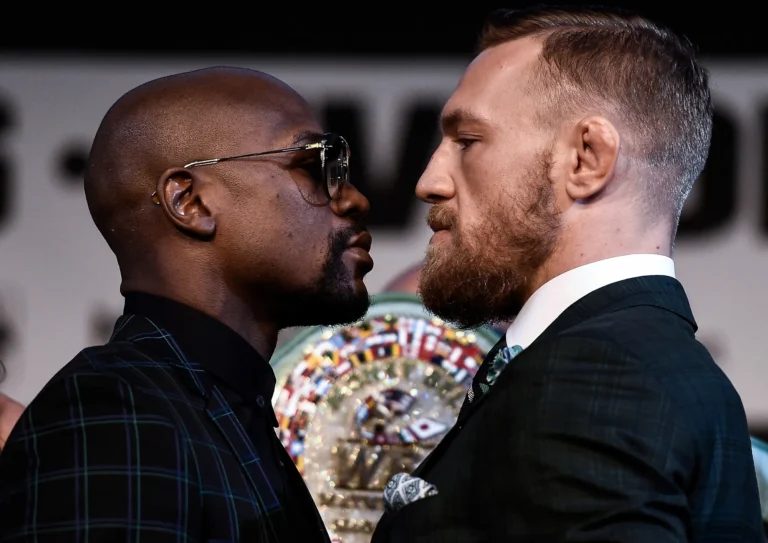
McGregor arrived at the Los Angeles opener in a tailored suit — later revealed to be a deliberate troll of Mayweather’s wardrobe — and immediately began attacking Mayweather’s age, his fighting style, and his well-publicized tax issues. Mayweather, never one to be upstaged, produced a check for $100 million from the Pacquiao fight and offered to bet McGregor his entire purse. The Toronto stop escalated further, with McGregor commanding 15,000 fans to chant obscenities at Mayweather in unison. In Brooklyn, Mayweather told his entourage to “form Voltron” and surrounded McGregor on stage. The London finale saw both men play to a European crowd firmly in McGregor’s corner.

ESPN’s Dan Rafael and Brett Okamoto scored the press tour round-by-round as if it were a fight — a gimmick that perfectly captured the spectacle. The tour served its purpose brilliantly: it generated daily headlines across mainstream outlets that rarely covered boxing, created viral social media moments, and convinced millions of casual fans that this event was unmissable. For a deeper look at how the fighters prepared their verbal arsenals.

The Undercard: Gervonta Davis, Badou Jack, and a Star-Making Night

The Showtime pay-per-view card wasn’t just one fight. The undercard featured meaningful bouts that delivered on their own merits. Gervonta “Tank” Davis, Mayweather’s prized protégé, defended his IBF junior lightweight title against Francisco Fonseca, stopping the unbeaten contender in the eighth round. Nathan Cleverly defended his WBA light heavyweight title against Badou Jack in a competitive fight that Jack won by split decision. The card also featured welterweight contender Yordenis Ugás, who would later become a world champion himself.

Fight Night: Round by Round

The national anthems set the tone. Imelda May sang the Irish national anthem. Demi Lovato performed “The Star-Spangled Banner.” McGregor entered first to a roar from the heavily Irish-flavored crowd. Mayweather followed, his face covered in a mask reminiscent of Bernard Hopkins. Robert Byrd was the referee. The 14,623 fans inside T-Mobile Arena represented an $80 million-plus live gate — a record at the time, surpassing the $72 million gate from Mayweather-Pacquiao.

The early rounds surprised almost everyone. McGregor came out aggressive, pressuring Mayweather, going to the body, and landing clean shots — including a first-round uppercut that snapped Mayweather’s head back. McGregor’s movement was unorthodox but effective, and his size (he was taller and longer than Mayweather) created angles the champion hadn’t seen before. Through three rounds, McGregor was competitive and arguably ahead on the cards.

But Mayweather had seen it all before — or at least the parts that mattered. His game plan, as he later explained, was deliberate: “Our game plan was to take our time, go to him, let him shoot his shots early and then take him out down the stretch.” Starting in the fourth round, Mayweather began stepping forward, increasing his punch output, and timing McGregor’s increasingly looping shots. By the sixth round, the momentum had decisively shifted. McGregor’s output dropped as fatigue set in — the consequence of a fighter accustomed to five-round UFC fights now deep into the championship rounds of a 12-round boxing match.

The Finish: Tenth-Round TKO

By the tenth round, McGregor was running on fumes. He opened the round with a body shot that was ruled a low blow, showing his last signs of life. Mayweather, patient as always, waited for McGregor to exhaust his final reserve, then went to work. A series of right hands along the ropes staggered McGregor badly. His legs buckled. He stumbled forward. More punches landed without meaningful response. McGregor never went down — he stayed on his feet throughout — but referee Robert Byrd had seen enough. He stepped in and stopped the fight at 1:05 of the tenth round.

Floyd Mayweather Jr. improved to 50-0, surpassing Rocky Marciano’s legendary 49-0 record. It was the first time Mayweather had finished a fight since stopping Victor Ortiz in 2011. All three judges had Mayweather ahead at the time of the stoppage — Dave Moretti scored it 87-83, Burt Clements 89-82, and Guido Cavalleri 89-81.

“I owed them for the Pacquiao fight,” Mayweather told Showtime’s Jim Gray after the fight. “I think we gave the fans what they wanted to see.”

McGregor was gracious in defeat: “He’s composed, he’s not that fast, he’s not that powerful, but boy is he composed in there. I thought it was close though and I thought it was a bit of an early stoppage. I was just a little fatigued. He was just a lot more composed with his shots.”

The CompuBox Numbers

The punch statistics told the story of a fight that changed midstream. Through the first five rounds, McGregor held a 51-40 edge in landed punches. From rounds six through ten, Mayweather outpunched McGregor 130-60. For the fight overall, Mayweather landed 170 of 320 punches (53 percent), while McGregor landed 111 of 430 (26 percent). More telling was Mayweather’s power-punch accuracy: he connected on 58 percent of his 152 power shots. McGregor landed just 25 percent of his power punches.

The numbers confirmed what the eye test showed — McGregor had enough skill and size to make the early rounds competitive, but lacked the conditioning, defensive technique, and ring generalship to sustain his attack against an all-time great who was content to weather the early storm.

The Money: Breaking Down a Billion-Dollar Event

Mayweather-McGregor was one of the most financially successful events in the history of combat sports. While exact figures were protected by confidentiality agreements, the known numbers are staggering.

The Nevada State Athletic Commission disclosed guaranteed purses of $100 million for Mayweather and $30 million for McGregor. Those were floor figures. With his share of the promotion, Mayweather’s total earnings were projected to exceed $275 million. McGregor’s total take was estimated to surpass $100 million — roughly 20 times his typical UFC purse of $1.6 million. The fight generated an estimated 4.3 million pay-per-view buys at $89.95 ($99.95 in HD), the second-highest total in history behind Mayweather-Pacquiao. The live gate of approximately $80 million set a new boxing record. Total revenue was projected between $550 million and $600 million.

Casino.org calculated that Mayweather earned approximately $59,347 per second of fight time and $3.5 million per minute. The combined purse exceeded the GDP of more than 140 countries. For a boxing industry perspective on the financial stakes.

What It Meant for Boxing

The legacy of Mayweather-McGregor within boxing is complicated. Critics argued that the fight diminished the sport by elevating a novice to the biggest stage — that it was a circus dressed up as a championship event, and that every dollar spent on a crossover spectacle was a dollar not spent on legitimate contenders. There was merit to this argument. McGregor had zero professional boxing experience. No boxing commission in any previous era would have sanctioned the fight.

Defenders countered that the event introduced millions of new fans to boxing, generated massive revenue for the sport’s ecosystem, and demonstrated that boxing could still produce cultural events on the scale of the Super Bowl. The fight’s 4.3 million pay-per-view buys dwarfed anything any active boxer other than Mayweather had done. The press tour alone generated more mainstream media coverage than the sport had received in years.

Perhaps the most significant legacy was what followed. The crossover model that Mayweather-McGregor pioneered — boxing against a non-boxer, sold on personality and spectacle rather than records and rankings — opened the door for the influencer boxing era. Jake Paul’s boxing career, which has generated millions of pay-per-view buys against former UFC fighters and aging champions, is a direct descendant of the template Mayweather-McGregor established. Whether that’s a good thing for the sport depends entirely on your perspective.

What It Meant for MMA

McGregor’s performance earned him more respect than many had predicted. He won early rounds against one of the greatest boxers ever, landed clean punches, and lasted ten rounds in his first professional boxing match. The UFC used the event as a proof of concept for the crossover appeal of its fighters. Dana White, who had initially mocked the idea, walked away from the event proclaiming satisfaction with the spectacle and McGregor’s performance.

For McGregor personally, the fight was transformative in financial terms — he earned more in one night than in his entire UFC career combined — but it marked the beginning of a decline in his MMA trajectory. He never recaptured his UFC momentum in the same way, losing three of his next four UFC fights. The lure of another massive payday in boxing kept the door open for rematch talk that persisted for years.

The Fighters: Where They Stand

For Mayweather, the McGregor fight was the final chapter of a perfect career — 50-0, five divisions, 15 world titles, and earnings estimated at over $1 billion across his career. He announced his retirement in the ring after the fight and, for the most part, kept his word regarding sanctioned professional bouts. He has since fought exhibitions against various opponents, including YouTuber Logan Paul, but has not returned to the official record books.

Mayweather’s place in boxing history was already secure before the McGregor fight. The 50-0 record, the defensive mastery, the financial empire — these are the pillars of his legacy. The McGregor fight added the exclamation point and the bank statement.

McGregor’s post-fight path has been more turbulent. He returned to the UFC and lost to Khabib Nurmagomedov in 2018. He knocked out Donald Cerrone in 40 seconds in 2020, but then dropped back-to-back fights to Dustin Poirier in 2021, the second of which ended with a broken leg. McGregor has remained one of the most recognizable athletes on the planet, but the combination of injuries, inactivity, and personal controversies has complicated his legacy.

The Full Fight Card

For the record, the complete Showtime PPV card on August 26, 2017:

  • Floyd Mayweather Jr. def. Conor McGregor — TKO, Round 10 (1:05), junior middleweight (154 lbs)
  • Badou Jack def. Nathan Cleverly — Split Decision (114-112, 113-113, 115-111), WBA light heavyweight title
  • Gervonta Davis def. Francisco Fonseca — TKO, Round 8, IBF junior lightweight title
  • Andrew Tabiti def. Steve Cunningham — Unanimous Decision

By the Numbers

  • Venue: T-Mobile Arena, Las Vegas
  • Attendance: 14,623
  • Live gate: ~$80 million (record at the time)
  • PPV buys: ~4.3 million (second-highest in history)
  • PPV price: $89.95 ($99.95 HD)
  • Total revenue: Estimated $550-600 million
  • Mayweather guaranteed purse: $100 million
  • McGregor guaranteed purse: $30 million
  • Mayweather estimated total earnings: $275 million+
  • McGregor estimated total earnings: $100 million+
  • Mayweather’s final record: 50-0 (27 KOs)
  • Referee: Robert Byrd
  • Broadcast: Showtime PPV
The root cause of the spectacular collapse of the alliance between Floyd Mayweather Jr. and Gervonta “Tank” Davis is a vicious power struggle that forced their former advisor, Leonard Ellerbe, to take sides, leading to a personal and professional schism that destroyed a 40-year relationship.

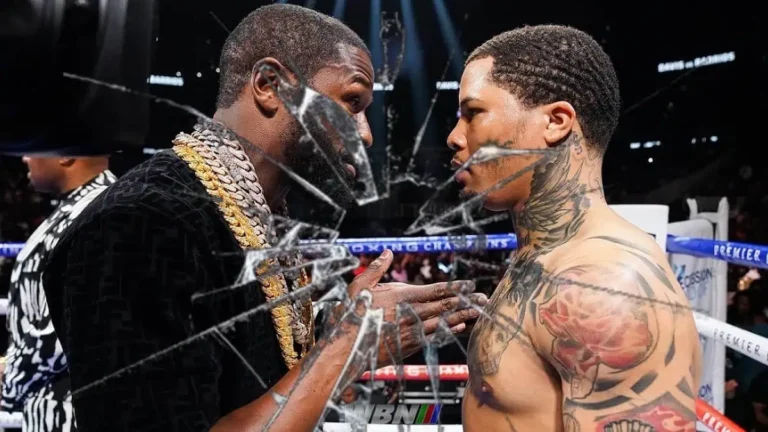
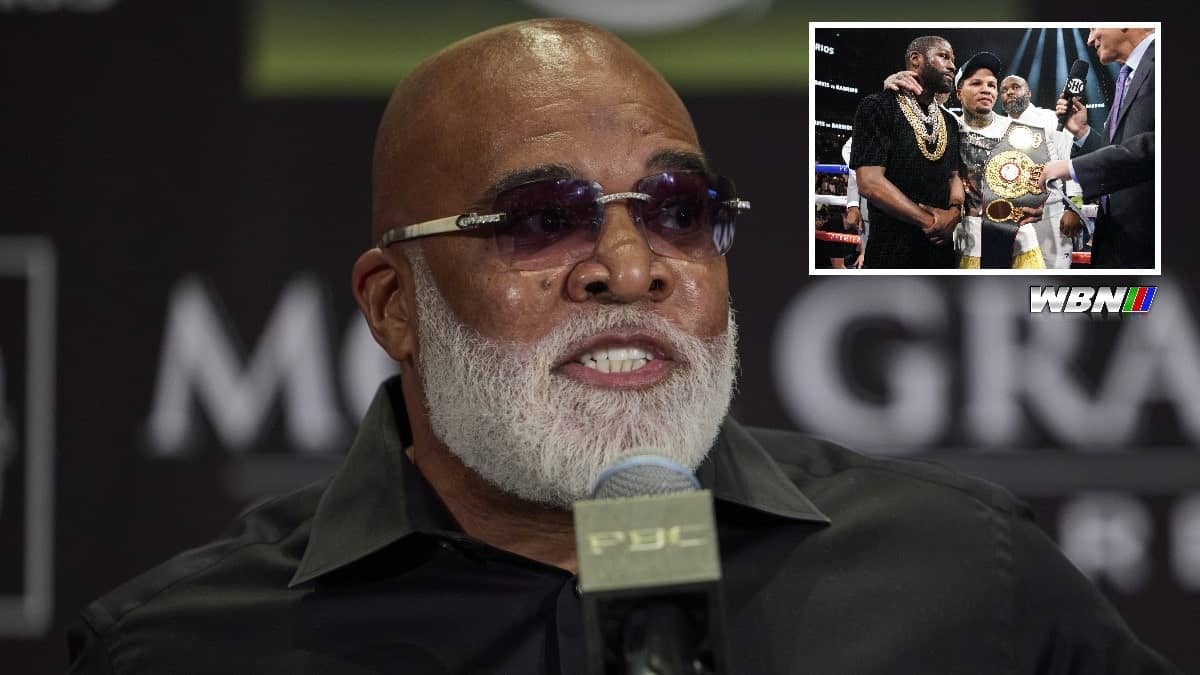
Ellerbe, the long-time CEO of Mayweather Promotions, has finally revealed the full emotional toll of the feud, detailing how the “tug of war” over Davis compelled Mayweather to issue a non-negotiable ultimatum: “Tank or Me.”

Floyd’s Ultimatum: The 40-Year Loyalty Breakdown
The actual cause of the split was not just business, but a deeply personal clash of loyalties that centered on Ellerbe’s role as a trusted mentor to both men. When Davis’s star began to eclipse the need for his promoter, the internal pressure became unbearable.

Leonard Ellerbe at Davis vs Martin

JUST IN: Canelo Alvarez set for surgery after Terence Crawford loss as return date is revealed

Ellerbe, who has advised Mayweather since the late 1990s, recounted the heartbreaking ultimatum that ended their professional and personal relationship. The advisor confirmed that Mayweather made him choose between his biggest star and his most significant project.

“This boxing s**t is deep and real,” Ellerbe stated. “Two people I know and have been knowing for 40 years that f**k with him got mad because Tank is my guy and will be forever. They said to pick a side. I said f**k you, we haven’t spoken since.”

This explosive quote confirms that Ellerbe chose his ongoing advisory role with the undisputed star, Gervonta Davis, over maintaining his four-decade alliance with the boxing legend. Ellerbe’s decision led directly to his departure as CEO of Mayweather Promotions, underscoring the severity of Mayweather’s command: If you’re with Tank, you’re against me.

The Rise and Rupture: Mayweather-Davis Relationship Timeline
The relationship between Mayweather and Davis began in 2015 when the Baltimore prodigy signed a promotional deal with Mayweather Promotions. “Tank” often credited Mayweather as a mentor who taught him not just the ropes of the ring, but the business of the world.

2017 Breakthrough: Davis exploded onto the world scene, winning the IBF super-featherweight title. Mayweather enthusiastically branded Davis as the future of boxing.

Growing Tensions (2019-2022): Despite success, tensions began to surface. Davis hinted at frustration over inactivity and feeling undervalued by the promotion. Mayweather, known for meticulous control, reportedly felt Ellerbe was granting Davis too much autonomy. Rumors of issues between Davis and members of the Mayweather family further exacerbated the growing rift.

The Final Move (2022): Following his victory over Rolando Romero in May 2022, Davis formally announced his departure from Mayweather Promotions, declaring the end of his contract. This move led to Davis taking control of his own promotional destiny, elevating Ellerbe’s advisory role and creating the direct conflict of interest that ultimately fractured the Mayweather-Ellerbe partnership.

The New Power Base: Ellerbe and Tank Go Independent
Ellerbe’s dramatic exit and his blunt confirmation of the ultimatum shed light on the intense power dynamics within the sport. While Mayweather quickly replaced Ellerbe as CEO, the personal loss is immense, particularly for Ellerbe.

The advisor’s decision confirms that his loyalty now rests firmly with “Tank,” signaling a new chapter in the boxing business, where Gervonta Davis is officially operating as his own power base, backed by the experience and conviction of the man who once steered the Mayweather Promotions ship.

With Davis going it alone with his exhibition fight against Jake Paul and subsequent retirement from boxing, Ellerbe faces an uncertain future.

Mike Tyson has agreed to another high-profile fight as he approaches his 60th birthday, and the former heavyweight champion says he had a very simple reason for doing so.

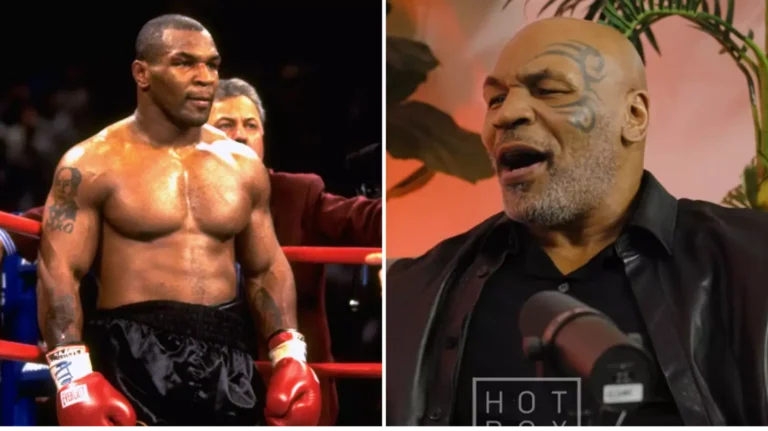
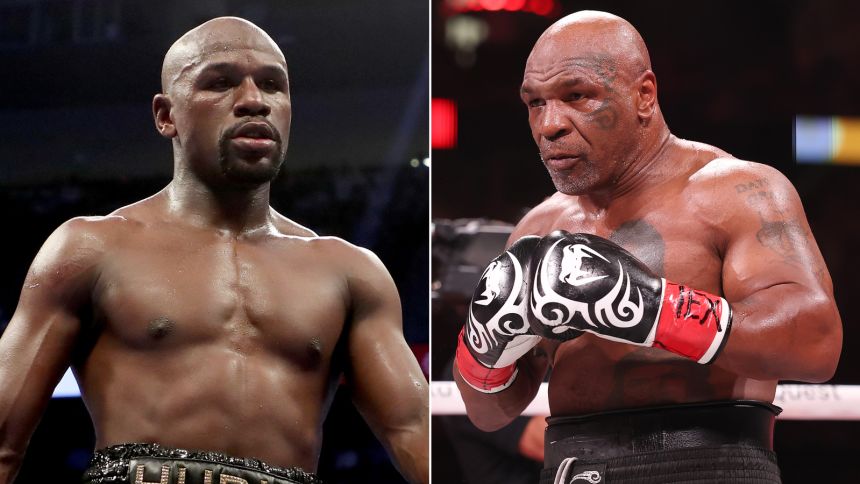
Tyson and Floyd Mayweather Jr. have agreed to an exhibition fight that is scheduled to take place at some point in the spring of 2026. During an interview with SportsRadio 94WIP in Philadelphia on Friday, Tyson was asked how the bout came together. He said Mayweather started “talking a lot of s—” out of nowhere.

“Because Floyd was talking a lot of s— and challenged me. I was minding my business. I wasn’t thinking about him,” Tyson said. “I was thinking about another way where we could invest more money in this and do this. I wasn’t thinking about fighting or nothing. We were all happy about the Jake Paul fight. We were thinking, you know, man, we could never top this, man. How could we top this?”

Mike Tyson and Floyd Mayweather Jr. set to meet in exhibition boxing match  in 2026 | CNN

JUST IN: Why Terence Crawford is not concerned about judging, plans

Tyson fought Paul last November in an event that was widely mocked. Paul, who is 31 years younger than Tyson, won in an eight-round unanimous decision. The fight actually counted towards the official record of both fighters, with Tyson dropping to 50-7 for his career.

Tyson said he was “really depressed” after fighting Paul.

“It was, like, depressing, I was really depressed. I said how could we ever top this? Nobody could ever top this. We broke the whole television system,” Tyson added. “And this came up. I gotta be careful what I ask for. I might get it, huh? Listen, I wasn’t expecting this. This guy just came out talking some mad s—. I didn’t say nothing to him or anything. I love Floyd. He’s talking crazy.”

Mayweather is 48, so he and Tyson are much closer in age than Tyson and Paul. Floyd has not had an official fight since 2017, though he has taken part in several exhibitions. His latest was a non-scored bout against John Gotti III in August 2024.

The big question is whether Tyson will be healthy enough for even just an exhibition against Mayweather. He dealt with some issues that forced a postponement with his fight against Paul, but the event still generated a ton of hype and money. Tyson’s exhibition against Mayweather will do the same if it winds up happening.

Manny Pacquiao has claimed that former rival and boxing legend Floyd Mayweather Jr is too scared to agree to a deal for a rematch. 

After years of circling during the peak of their respective careers, Pacquiao and Mayweather finally went head-to-head in May 2015 in a contest which at the time broke pay-per-view records in the United States.

However, for those watching, the long awaited showdown between Mayweather and Pacquiao failed to live up to expectations with the former triumphing by unanimous decision.

Pacquiao eyes brawl with Mayweather in blockbuster exhibition bout | Daily  Sabah

JUST IN: “He Really Might Pull Out”: Gervonta Davis vs Lamont Roach Rematch In Jeopardy

Since then, the two fighters have gone their separate ways with Mayweather retiring from the sport, but still participating in exhibition bouts.

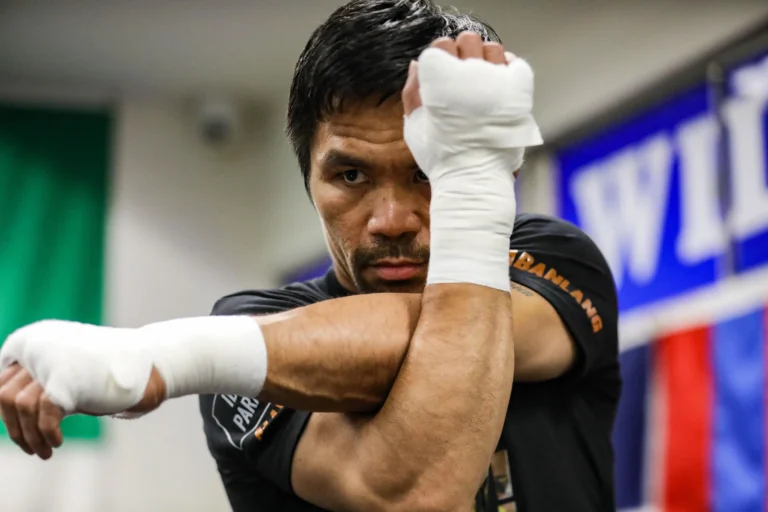
Pacquiao on the other hand is preparing for a comeback following a near four-year retirement and is eager to have a second meeting with Mayweather.

Speaking in an interview with Covers.com, Pacquiao believes it’s his American counterpart who is stopping one of the biggest rematches in boxing from happening.

“I don’t think Floyd Mayweather will fight me again, he’s scared to death to fight again, that’s what I’m thinking,” Pacquiao said.

“It’s a huge fight [between me and Mayweather] but there’s a lot of reasons or alibis for why he didn’t make it [the rematch with me].

“Lots of excuses, I guess.”

While a Pacquiao-Mayweather rematch seems further away than ever, the Filipino’s boxing comeback will come against WBC welterweight champion Mario Barrios on July 19 in Las Vegas.

Earlier last month, reports surfaced that boxing icon Floyd Mayweather Jr. had filed a $100 million lawsuit against Business Insider.

The legal action stemmed from an article claiming that a $402 million real estate investment in New York City’s Upper Manhattan, which the 48-year-old former champion had publicly touted, could not be verified in public records. This implied that the real estate deal might be fabricated.

Soon, rumors began swirling on the internet that Money Mayweather was facing bankruptcy. This was furthered by Mayweather’s former friend, 50 Cent, who suggested that there might be some truth to the rumors. In the wake of the news, a YouTube channel called Fighters Corner posted a video titled “Stephen A. Smith EXPOSES Floyd Mayweather For Going BANKRUPT After $402 Million SCAM,” which quickly went viral, racking up nearly 470K views in a month, sparking speculation about Mayweather’s financial health.

Mayweather living the high life

READ: Oleksandr Usyk Admits His Biggest Weakness Two Weeks Before Daniel Dubois Rematch

Amid the swirling rumors, Floyd Mayweather Jr. appeared at The Real Deal’s New York City Forum on May 7, where he addressed the bankruptcy claims head-on. “Everybody is entitled to their own opinion, but if that’s what you call having two private jets, owning 100 buildings, and being able to do what you want, then I’m pretty sure everybody is going bankrupt,” he responded. True to form, Mayweather has since silenced his critics, this time with yet another humongous purchase.

Just a few hours ago, Floyd Mayweather Jr. took to Instagram with a post that read, “When y’all make another video about me being broke, make sure you include this footage.” The video showcased four of his newest car purchases, adding to what’s estimated to be a $40 million car collection. Reportedly, Floyd Mayweather Jr. owns around 100 cars of various makes and models. His all-black fleet is based in Los Angeles, while an all-white collection remains in Miami. And this latest batch of luxury vehicles is just another addition to his ever-expanding garage.

In the video, the 50-0 boxer can be seen inside a showroom alongside his car dealer, Nick, while proudly walking the viewers through his newest purchase. “It’s the money man. I’m back like I ain’t never left,” he begins. Pointing to a blue sports car, he explains, “This is one of my new toys. I like to call this Miami Dolphins or Tiffany Blue, whatever you want to call it.” The clip then shows a Ferrari 488 Spider: “This toy right here, I like to call the Italian Stallion. Kind of reminds me of Rocky Balboa.” Next, he unveils a Porsche 911 GT3 RS, adding, “I like to call this one right here, White Girl Waste.”

Finally, Floyd Mayweather walks outside while stating, “They say, save the best for last.” And Nick introduces the crown jewel, a rare Maybach Landaulet G-Wagon, valued at upwards of a $1 million. “One of only 99 in the world,” Nick explains, adding that it had “delivery miles” on it. Mayweather climbs into the vehicle, sits back, and declares, “First class on the ground. Money May, y’all know the rest,” before ending the video. That should be enough to show the former boxer is doing pretty well in life, right?

Regardless, if you still think Floyd Mayweather Jr. went broke, he’s more than ready to offer a few more receipts to prove otherwise.

Floyd Mayweather breaks silence on bankruptcy rumors with a flex

Through his legendary boxing career and sharp business ventures, Floyd Mayweather Jr. has built an astonishing net worth of $500 million. So, when reports surfaced questioning his financial standing, many were taken by surprise. In what appeared to be a direct response to those claims, the 48-year-old shared a bold post on Instagram, writing, “I’m still Cocky, I’m still Flamboyant, I still don’t give a F#ck!”

During his time in the ring, Floyd Mayweather Jr. defeated every opponent he faced. Meanwhile, two of his most notable rivals, Manny Pacquiao and Canelo Alvarez, are preparing for high-profile returns. Pacquiao, now 46, is set to face Mario Barrios for the WBC welterweight title, while Canelo takes on Terence Crawford in a super middleweight superfight on September 13. Mayweather, however, has shifted his focus to business, becoming a serious real estate investor with growing interests in that field.

Still, his boxing skills haven’t completely faded. Recent training footage of Mayweather hitting pads has reignited speculation about a possible comeback. At 48, a return to professional boxing seems unlikely, but he’s remained active through exhibition bouts, having faced the likes of Logan Paul, Tenshin Nasukawa, Deji, and Mikuru Asakura.