Charlie Woods in hot demand over college golf career: Who’s in the race?
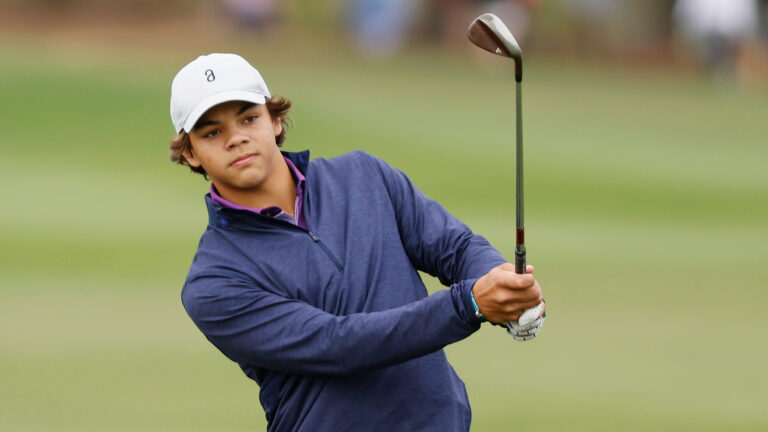
A wave of interest is unsurprisingly building around Charlie Woods, and according to those closest to him, conversations have already begun. Multiple college coaches and top programs are understood to be in talks with Tiger Woods’ son as they position themselves for one of the most coveted commitments in junior golf.
Charlie might be keeping his cards close to his chest over his next move, but the scramble to recruit him is very much underway—especially after what he has achieved in 2025.
At just 16 years old, the son of a certain 15-time major champion has become the most talked-about uncommitted talent in the AJGA (American Junior Golf Association) Top 10.
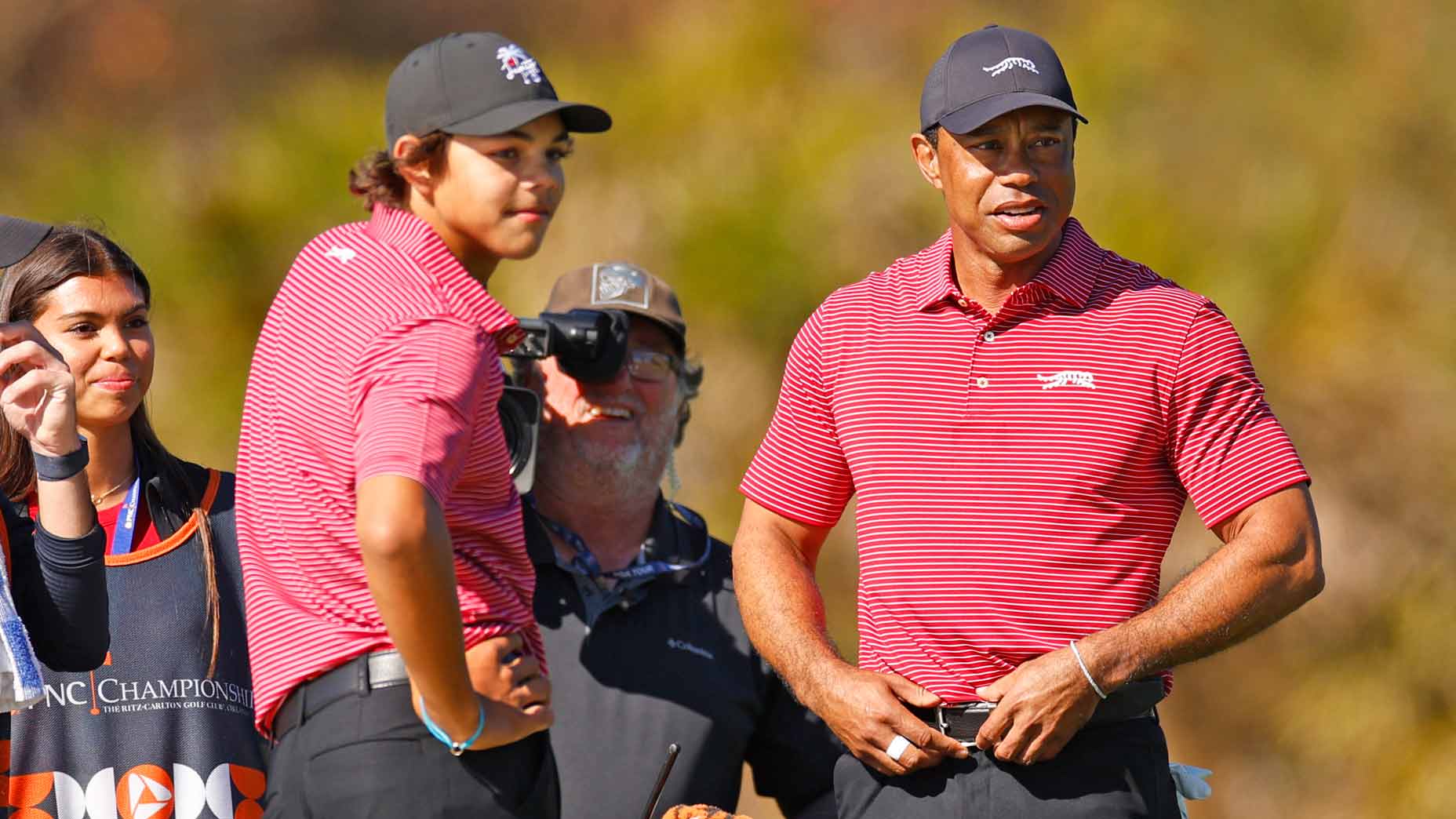
Charlie’s breakout 2025 season, the strongest of his career to date, has turned quiet college golf enquiries into serious interest.
Charlie Woods in hot demand over college career
With his first AJGA win at the Team TaylorMade Invitational in March, a stunning ace at TPC Sawgrass during the Junior Players Championship over the summer, and leading Benjamin School to state championship victory last week, Charlie’s profile has soared.
The AJGA underscored his rapid ascent by naming him to its first-team All-American list, the same honour Tiger earned more than three decades ago.
Now ranked ninth in the AJGA standings heading into 2026, Charlie stands as the only top-10 junior still undecided over their college choice—a status that has made his recruitment one of the most intriguing plotlines in the sport.
Benjamin School head coach Toby Harbeck last week confirmed the growing interest, telling The Palm Beach Post that Charlie has been “very mum-mum” about his preferences despite plenty of coaches actively pursuing him.
“There’s a lot of people that want him,” Harbeck told the publication. “It’s just where he feels most comfortable. He’s visited a couple schools. We’ll see.”
Florida State leading race
One school that appears to be stepping forward is Florida State.
According to The Palm Beach Post, Florida State head coach Trey Jones was spotted speaking with Tiger Woods moments before Charlie posted a superb team-leading final-round 68 at the Florida Class 1A State Championship.
The Seminoles—2024 national runners-up—already have a commitment from rising superstar and AJGA No. 1 Miles Russell, so landing Charlie would complete a blockbuster 2027 recruiting class.
Meanwhile, the Florida Gators (University of Florida) have made early moves of their own, securing AJGA Top 10 prospects Giuseppe Puebla (No.2) and Jessy Huebner (No.4). The Gators already have Ian Poulter’s son Luke Poulter, who made the GB&I Walker Cup team this season.
Adding Charlie to either side of the Florida rivalry would therefore dramatically tilt the recruiting landscape in the state.
Follow in family footsteps?
Then there’s Stanford—the most sentimental option of all.
The Cardinal remain closely tied to the Woods family thanks to Tiger’s legendary collegiate career and Charlie’s sister Samantha currently studying there.
During his two seasons at Stanford (1994–1996), Tiger Woods set numerous records, including a school record of 11 tournament wins, a career stroke average of 70.96, and a dominant performance that led to him winning the 1996 NCAA Championship.
He was also named the Pac-10 Player of the Year twice, earned First-Team All-American honors, and won the Ben Hogan and Haskins Awards in 1996.
Stanford’s academic prestige and golfing pedigree make them a perennial contender for Charlie.
An outside contender for his signature could be the University of Miami, especially with Kai Trump, 18, heading up their college team in 2026.
Charlie’s father Tiger confirmed he is dating Kai’s mother Vanessa Trump earlier this season.
Kai, who also attends Benjamin School, made her LPGA debut last week at The Annika after receiving a sponsor exemption from golf legend Annika Sorenstam.
She received advice from Tiger before the tournament.
Kai went on to finish last but performed admirably given the circumstances, especially with a brilliant second-round 75 that included four birdies.
Big decision ahead for Charlie
For now, Charlie’s college choice remains unknown, but what is clear is the groundwork being laid behind closed doors.
College coaches are circling, conversations are happening, visits are underway, and as Charlie’s performances continue to elevate, the urgency among top programs is growing.
The American’s rapid rise on the state and national stage mirrors his increasingly crowded recruitment picture.
After a season that has shifted him from emerging talent to headline attraction, the next six months will see the battle for Charlie’s commitment intensify.
Charlie’s college choice will be one of the most defining storylines in junior golf next season, and whichever programme ultimately secures him will gain not only a premier recruit, but a player on a trajectory that continues to steepen with every round.